Shenzhen Mivo Electronics Co., Ltd.
PCB Fabrication · Turnkey PCBA · Component Sourcing · Custom Sensors [email protected]
0%

A Membrane Keypad can look simple: printed graphics, a flexible circuit, and a tactile or non-tactile switch layer. Choosing one is less simple. The right construction depends on where it will be used, how often it will be pressed, and what users need to feel. A keypad beside a gloved operator’s wash station faces different demands from one on a handheld instrument. Small details matter.

Industry forecasts help explain the wider context, but they cannot choose a design for you. MarketsandMarkets’ Human Machine Interface Market report estimated the market at USD 5.4 billion in 2023, with a forecast of USD 7.3 billion by 2028. That broader category includes many interface technologies, not membrane keypads alone. Still, it reflects continued investment in how people control equipment. Forecasts vary by scope, so treat them as context—not a product specification.

This guide looks at practical selection factors: overlays, switch feel, circuit materials, sealing, lighting, and expected operating life. It also considers what to verify with a manufacturer, including sample testing under realistic conditions. A stated ingress rating, for example, should be checked against the complete assembled product and its test evidence. There is no universal stack-up. A thicker overlay may improve durability but change button feel; a brighter backlight can add power and cost. Trade-offs are real. Some decisions will need revision after hands-on testing.
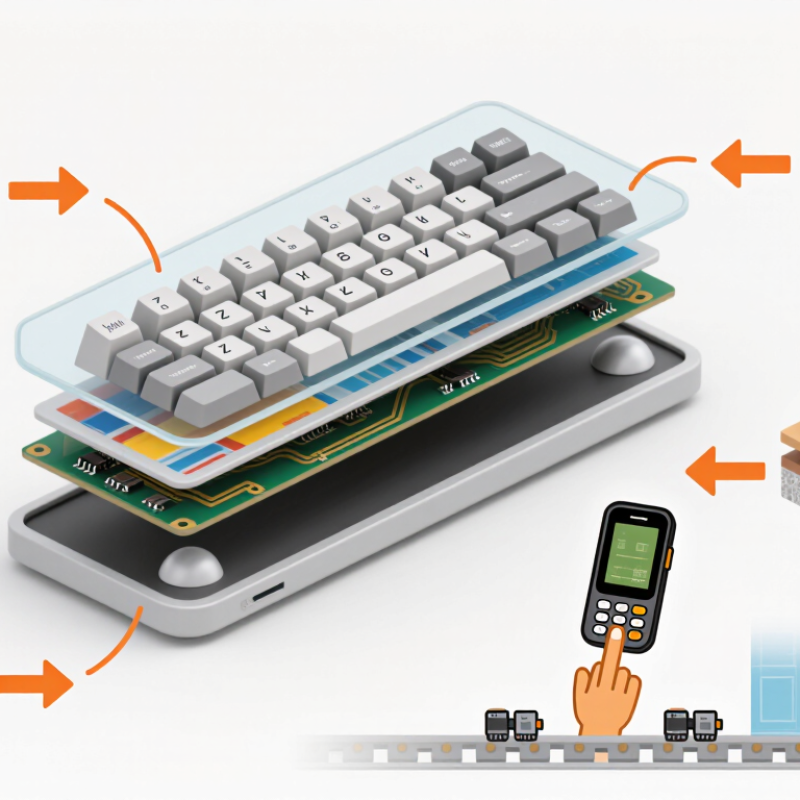
How to Choose a Membrane Keypad for Your Product?

Define the Product Requirements and Operating Conditions

Before selecting a membrane keypad, document what users will press, how often, and with what force. A glove-wearing operator may need larger keys and stronger tactile feedback; a handheld device may need a thinner, sealed overlay. Record temperature range, humidity, cleaning agents, dust or water exposure, and expected service life. Specifics matter. A keypad near a washdown area needs a different seal and material stack from one inside a dry instrument cabinet.

Operating conditions should guide the design, not be added after tooling begins. Check the required ingress-protection rating against IEC 60529, then validate the assembled product with appropriate environmental tests. The IEC standard defines test conditions; it does not guarantee performance in every real installation. MarketsandMarkets’ 2023 Human Machine Interface market report valued that market at USD 5.4 billion and projected USD 7.7 billion by 2028, reflecting broad demand for operator interfaces, not a keypad specification. Grand View Research’s 2024 membrane-switch market report also tracks growth in this component category. These figures offer context, not design limits.

Build a test sample, expose it to the actual cleaning fluid and temperature cycle, and inspect for lifted edges, fading legends, or missed key presses. I would not assume a published rating covers every use case. A small test early can reveal an expensive oversight.

Compare Membrane Keypad Materials and Layer Construction

How to Choose a Membrane Keypad for Your Product?

Compare Membrane Keypad Materials and Layer Construction

A membrane keypad’s feel and lifespan depend on its materials and layer construction. Polyester overlays often suit frequent pressing because they flex well and resist wear. Polycarbonate can provide a firm, clear surface, but scratches may show more readily on some finishes. Consider the actual environment: oily fingers, cleaning wipes, sunlight, and temperature shifts can all affect the overlay. A choice that seems obvious on paper may disappoint during a cold-weather test.

Look beyond the top layer. A typical keypad combines a printed overlay, adhesive, spacer, and circuit layer. Spacer thickness and key shape influence travel and tactile response. Embossed keys can help users find buttons by touch, while flat keys may simplify cleaning. Adhesive selection matters too; poor bonding can allow edges to lift after repeated exposure to heat or moisture. Ask for samples built with the proposed layer stack, then test them with the intended enclosure and mounting pressure. Small details matter. Test it physically.

Select the Circuit, Switch, and Interface Configuration

Choose the circuit around the product’s environment and service life. Printed silver circuits suit many low-profile keypads, while copper flex can better support fine-pitch routing and repeated flexing. For a wet or frequently cleaned enclosure, specify a sealed perimeter and test the assembled keypad, not just its overlay. Small detail, big consequences.

Choose the switch by feel and expected use. Metal domes provide a distinct tactile snap; non-tactile switches can keep the surface quieter and thinner. Ask suppliers for measured actuation force and cycle-life data, then test samples with gloved hands if users will wear them. I have seen teams select a satisfying bench feel that becomes tiring during long shifts. Recheck it.

The interface configuration should match the host electronics: tail or connector, pinout, LED supply, and grounding all need agreement before tooling. IEC 61000-4-2:2008 defines contact-discharge test levels from 2 to 8 kV, a useful reference when setting ESD requirements. It is not a substitute for testing the finished product. Document the target level, then test the keypad in its actual enclosure and cable arrangement; small layout changes can alter results.

Evaluate Durability, Feedback, and Customization Options

A membrane keypad should survive the conditions around it, not just look suitable on a drawing. Check the expected actuation life, operating temperature, moisture exposure, and cleaning routine. Ask for test results under conditions close to your product’s use. A keypad near a gloved operator may need a different actuation force and tactile response from one used indoors with bare hands. Small details matter.

Feedback is worth testing with real users. Compare samples for force, key travel, and the feel of the tactile dome; a click that feels crisp on a bench may feel tiring after a full shift. MarketsandMarkets’ 2023 Human Machine Interface market report projected growth from $5.5 billion in 2022 to $7.1 billion by 2027, a 5.2% compound annual growth rate. That forecast signals wider demand for interfaces, but it does not prove any keypad’s durability. Test before specifying.

Customization can include printed legends, window shapes, backlighting, adhesive layers, and tail connectors. Confirm that labels remain legible after repeated wiping, and check whether light leaks around the keys in a dim room. Request samples with your actual graphics and mounting stack-up. One caveat: teams sometimes approve appearance before testing assembly. I would revisit that sequence. It is easy to overlook. A slightly imperfect prototype can expose fit or feedback problems early, when changes are still practical.

How to Choose a Membrane Keypad for Your Product? — Evaluate Durability, Feedback, and Customization Options

Evaluation Dimension Options and Typical Characteristics Best Fit What to Confirm Before Selection
Expected service life Key life depends on the switch design, materials, actuation conditions, and test method. Suppliers may specify cycle-life targets for individual keys; these should be treated as design specifications, not universal guarantees. Products with frequent or repeated key use, such as control panels and handheld instruments. Request the stated cycle-life rating, test conditions, and evidence that the rating applies to the proposed construction.
Environmental protection Printed overlays and sealed perimeters can help resist dust and moisture. An IP rating applies to the tested assembly and installation, not to the overlay material alone. Equipment exposed to cleaning, dust, splashes, or outdoor conditions. Confirm the required IP rating, enclosure interface, cable exit sealing, and whether the complete installed product has been tested.
Surface and chemical resistance Polyester and polycarbonate overlays are common choices. Resistance varies with the specific grade, coating, cleaning agent, concentration, and exposure time. Medical, industrial, or food-related equipment that is cleaned regularly. Test the proposed overlay and printed surface with the actual cleaners, disinfectants, oils, or solvents used in service.
Key feedback Non-tactile keys provide a flatter feel; embossed features add a raised surface; tactile domes provide a more noticeable response. Feel and sound depend on the complete switch stack and mounting. Choose non-tactile designs for low-profile interfaces and tactile designs when users need clearer confirmation of a press. Evaluate samples with the intended overlay, backing, and mounting. Check user preference, operating noise, and consistency across keys.
Actuation force and travel Force and travel are design-dependent. A lighter press may reduce effort, while a firmer press can help prevent unintended input; the right balance depends on the application. Handheld devices, frequently used controls, or interfaces operated with gloves. Specify preferred force and travel, then confirm them on production-representative samples rather than relying on a generic range.
Graphic overlay Options include printed legends, colors, windows, transparent areas, textured finishes, and protective coatings. Printing method and material affect appearance and wear. Products needing clear instructions, product-specific layouts, or a distinctive visual interface. Review artwork, color references, viewing conditions, legend durability, and alignment with the underlying keys and display.
Key shape and layout Key areas can be designed with different sizes, spacing, shapes, and embossed or raised features, subject to the circuit and overlay construction. Interfaces with a defined workflow, limited panel space, or accessibility requirements. Check finger access, accidental-press risk, label legibility, and whether frequently used functions are easy to locate.
Lighting and display windows LEDs, light guides, translucent windows, or transparent display areas can be incorporated. Brightness and uniformity depend on the light source, stack-up, and ambient conditions. Low-light environments, status indication, or interfaces that include a display. Verify visibility in the actual environment, light leakage, color consistency, power requirements, and window alignment.
Electrical connection Tail style, connector type, circuit arrangement, and contact configuration are selected to suit the control electronics and available space. New designs or replacement keypads that must integrate with an existing controller. Confirm pinout, connector mating parts, cable length, routing, electrical ratings, and tolerance for installation.
Prototype and validation plan Prototype samples allow teams to review feel, appearance, fit, and electrical operation before committing to production tooling or volume. Custom layouts, demanding environments, or products with strict usability requirements. Agree on sample quantities, acceptance criteria, environmental tests, life-cycle tests, and approval steps before production.

Note: Performance varies by design and installation. Confirm specifications and test results for the complete keypad assembly in the intended operating environment.

Verify Prototypes, Compliance, and Manufacturing Quality

How to Choose a Membrane Keypad for Your Product?

Verify Prototypes, Compliance, and Manufacturing Quality

A keypad can look finished while still feeling wrong in daily use. Test a working prototype on the actual device, not only on a flat bench. Press every key with dry and lightly damp fingers. Check whether feedback is clear, neighboring keys respond correctly, and the legend remains easy to read under expected lighting. Small details matter.

Review the stack-up, including the overlay, adhesive, circuit layers, and connector tail. Ask for material specifications and test records that match your product’s expected heat, moisture, cleaning, and operating conditions. Compliance needs depend on the device and its destination markets, so confirm applicable requirements with qualified specialists. Keep the records tied to the exact prototype and production revision. Paperwork alone is not proof of performance.

Before approval, inspect samples from more than one production run. Compare key height, alignment, print color, and tail dimensions against agreed tolerances. Ask how the manufacturer controls incoming materials and catches defects during assembly. A single golden sample can be reassuring, but it may hide variation. I would also repeat key testing after environmental exposure; it takes time, and it can reveal weaknesses that a quick bench check misses. The test plan may need adjustment once real users handle the keypad.

How to Choose a Membrane Keypad: Check RoHS Material Limits

When evaluating keypad materials and suppliers, request material declarations or test reports for the homogeneous materials used in the assembly. These EU RoHS concentration limits apply where relevant; specific exemptions may apply.

Limits are by weight in each homogeneous material: 0.1% for the listed substances except cadmium, which is limited to 0.01%. During prototype review, confirm material documentation and test results, then verify production controls keep supplied materials consistent. Reference: EU RoHS Directive 2011/65/EU, Annex II, as amended by Directive (EU) 2015/863.

FAQS

How do polyester and polycarbonate overlays differ?

Polyester flexes well and often suits frequent pressing. Polycarbonate can feel firmer, but some finishes show scratches more clearly. Test both under real lighting.

What layers make up a typical membrane keypad?

It usually includes a printed overlay, adhesive, spacer, and circuit layer. Spacer thickness and key shape affect travel and feel. Small details matter.

How can I check the keypad’s feel before choosing it?

Press samples with dry and damp fingers, then repeat the test many times. Try angled light to check label readability. One press is not enough.

Which switch type should I choose?

Metal domes provide a distinct tactile snap. Non-tactile switches can make the keypad quieter and thinner. Test the force during a long-use trial.

What should I consider for wet or frequently cleaned products?

Check the adhesive, sealed perimeter, and overlay against your cleaning routine. Test the fully assembled keypad, not just a loose sample. Edges can lift.

What interface details should be agreed on before production?

Confirm the tail or connector, pinout, LED supply, and grounding. Test the keypad in its actual enclosure and cable arrangement. Layout changes can matter.

How do I know whether a keypad will last in my environment?

Compare expected cycle life, operating temperature, moisture exposure, and cleaning conditions with your product’s use. Ask for relevant test results. Then test samples yourself.

What customization options should I test?

Check printed legends, window shapes, backlighting, adhesive layers, and connector placement. Use your actual graphics and mounting stack. Look for light leaks in a dim room.

Conclusion

Choosing a Membrane Keypad starts with understanding how the product will be used. Define its operating environment, user needs, space constraints, and expected service life. These requirements help guide decisions about materials and layer construction, including the overlay, adhesive, spacer, and circuit layers. The right combination can support the desired appearance, protection, and performance.

Next, consider the circuit design, switch behavior, and interface configuration, along with the level of tactile or visual feedback users need. Assess durability, customization options, and compatibility with the product’s design. Before full production, review prototypes under realistic conditions and confirm that the keypad meets applicable requirements and quality expectations. Careful evaluation at each stage helps ensure the finished Membrane Keypad is practical, reliable, and suited to its intended application.

Ethan

Ethan

Ethan is a professional marketing specialist with a deep understanding of the company’s products, customers, and market. He combines product knowledge with a clear, practical communication style, helping readers understand how products work, what benefits they offer, and how to choose solutions......