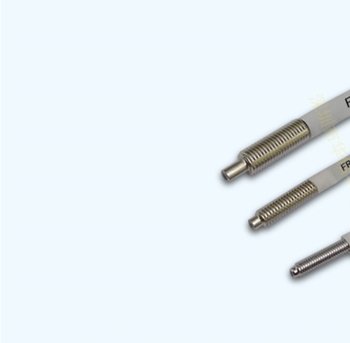
Core Sensor
FR-D310 M3/M4/M6 Diffuse Fiber Probe
Bifurcated & coaxial optics, SUS304 tip, flexible 2m cable
Min. Order: 10 Pieces
Digital Fiber Amplifiers & Turnkey Sensor PCBA
Industrial Probes Built to Drawing & Specs
A comprehensive technical breakdown for procurement specialists, industrial system integrators, and robotics design engineers seeking high-stability non-contact object detection in challenging environments.
A diffuse reflection fiber optic sensor operates as an integrated bifurcated or coaxial optical sensing unit where both the light-emitting element and the receiving element terminate within a unified probe tip. Unlike thru-beam sensors—which demand two independently wired sensor housings facing each other across an alignment axis—or retro-reflective sensors requiring a dedicated corner-cube prismatic reflector, diffuse reflective systems project focused light directly onto the workpiece surface and gather scattered photon energy back into the receiving core.
The physical mechanism relies directly on Lambertian and mixed specular-diffuse reflectance. When the emitter core (typically driven by a high-intensity red 660 nm LED or an infrared 850 nm semiconductor laser diode located inside a separate DIN-rail digital fiber amplifier) projects photon streams across the optical fiber channel, the beam exits the polished terminal face. When an object traverses this optical corridor, photons undergo multidirectional scattering according to the material's micro-topography, color remission spectrum, and surface geometry. The receiving fiber core gathers a fraction of this scattered light flux and channels it back to a high-speed photodiode receiver within the amplifier unit.
For global industrial buyers, the engineering beauty of diffuse reflection fiber optics lies in their physical decoupling: the active electronics (amplifiers, potentiometers, microcontrollers, LED transmitters, and phototransistors) stay safely protected inside DIN-rail cabinets or machine junction boxes, while purely passive, non-electrical optical fiber leads enter tight spaces, explosive gas envelopes, high electromagnetic fields, or chemical bathe environments where conventional photoelectric switches fail.
Explore our onsite-manufactured diffuse optical fiber probes, digital optical amplifiers, and turnkey electronics hardware trusted across global automation lines.
Bifurcated & coaxial optics, SUS304 tip, flexible 2m cable
Min. Order: 10 Pieces
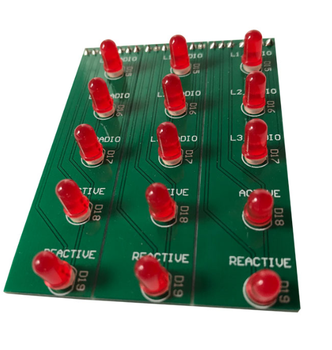
High-speed dual LED threshold processor with push-pull I/O
Min. Order: 5 Pieces
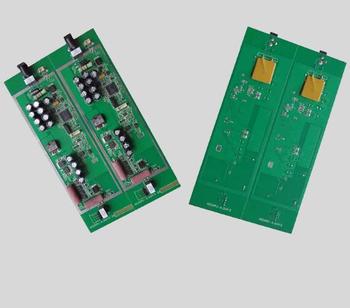
FR-4 high-Tg substrate, controlled impedance, gold immersion
Min. Order: 100 Pieces
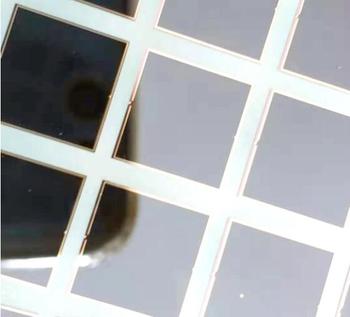
High quantum efficiency detector chip for custom optical receiver
Min. Order: 10 Pieces
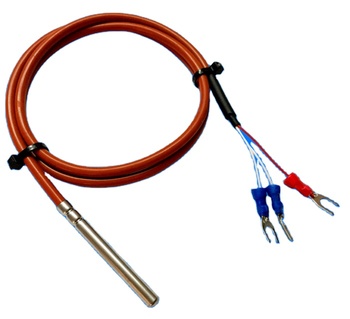
Harsh environment thermal monitoring for furnace & tooling lines
Min. Order: 10 Pieces
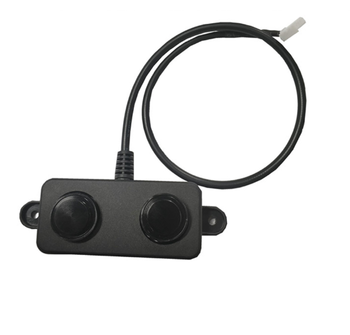
UART / PWM output transceiver for long-range presence verification
Min. Order: 10 Pieces
Market data reveals massive transitions across semiconductor equipment, cleanroom robotics, and lithium battery gigafactories. Here is what engineering procurement teams must prepare for over the next 3 to 5 years.
Procurement is pivoting from binary (NPN/PNP) outputs to smart digital optical amplifiers featuring IO-Link v1.1. Buyers now specify real-time transmission of received light quantity, photodiode degradation margins, and temperature drift. This transition enables predictive maintenance schedules, avoiding emergency conveyor shutdowns in automated cleanrooms.
With wafer handling, 3C electronics assembly, and medical microfluidics requiring sub-millimeter target positioning, demand is rapidly concentrating on M3 threaded heads and 0.5 mm smooth sleeve probes. Coaxial fiber structures (center emitter, ring receiver) are superseding parallel bifurcated fibers to eradicate blind zones near probe tips.
Tier-1 Japanese and European sensor brand lead times frequently stretch past 16–24 weeks with premium pricing. Overseas procurement directors are actively onboarding onsite-verified Shenzhen manufacturers like Shenzhen Mivo Electronics Co., Ltd. that deliver 100% mechanical and optical cross-compatibility at 40%–60% lower costs and 2-week lead times.
| Fiber Technology Type | Optical Fiber Core Spec | Operating Temperature | Key Advantage | Best Suited Application |
|---|---|---|---|---|
| Standard Bifurcated Diffuse | PMMA Plastic Optical Fiber (Ø1.0mm) | -40°C to +70°C | High flexibility, cost-effective, easily trimmed to length | General packaging, conveyor counting, box detection |
| Coaxial High-Precision Diffuse | Center 0.5mm Core + Multi-ring Outer Cores | -40°C to +85°C | Zero tip blind zone, symmetric detection spot, microscopic pin detection | SMT lead inspection, semiconductor wafer positioning |
| Stainless Armored Glass Diffuse | Borosilicate Multi-filament Fiber Bundle | -60°C to +200°C / +350°C | Immune to molten flux, cutting oils, high radiant heat | Automotive welding robots, steel plants, ceramic ovens |
| Chemical Resistant Fluoropolymer | Quartz Core with PTFE/PFA Protective Sheath | -40°C to +150°C | Impervious to concentrated acids, aggressive cleaning agents | Semiconductor wet benches, chemical dosing pumps |
| High-Flex Robotic Fiber | Multi-Core Braided Polymer Fibers | -20°C to +70°C | Withstands 10,000,000+ cyclic reverse bendings (R5) | High-speed Delta robots, pick-and-place grippers |
Real-world insights direct from our sensor engineering and quality test floor in Shenzhen to assist your automation commissioning.
| Observed Failure Mode | Underlying Optical Mechanism | Corrective Engineering Action |
|---|---|---|
| False Triggering on Mirrored Parts | Specular reflection overwhelms receiver at perpendicular angles, blinding the amplifier threshold. | Tilt probe 15° to 25° relative to normal surface, or switch to a coaxial polarized fiber configuration. |
| Target Dropout on Dark Mattes | Low remission material scatters light away from the numerical aperture of the fiber head. | Specify a high-gain digital amplifier, upgrade from M3 to M6 fiber heads, or shorten the sensing gap. |
| Signal Attenuation over Time | Core face scratching or airborne mist/cutting fluid accumulation on optical terminal surfaces. | Implement clean dry-air purging nozzles, protective quartz glass lens caps, or PTFE outer jackets. |
| Internal Fiber Fracture in Drag Chains | Single standard monofilament fiber exceeding minimal bending limits under continuous reciprocating cycles. | Deploy Mivo high-flex multi-core spiral fiber bundles engineered specifically for continuous cable tracks. |
Combining precision fiber optics fabrication, component supply chain excellence, and high-reliability SMT PCBA under one roof in Shenzhen, China.
Founded in 2016 and located in Yuanshan Street, Shenzhen, Shenzhen Mivo Electronics Co., Ltd. specializes in industrial sensor manufacturing, PCB fabrication, electronic component sourcing, and one-stop turnkey PCBA assembly. Unlike pure trading middlemen who possess no test benches, our onsite-verified manufacturing facility combines dedicated sensor clean assembly rooms with automated high-speed SMT placement lines.
For industrial automation companies needing diffuse reflection fiber optic sensors, we provide end-to-end vertical integration. We produce custom optical probe tips (stainless steel SUS304/SUS316, copper, aluminum), draw and assemble multi-filament polymer and quartz fiber bundles, and manufacture the accompanying digital amplifier printed circuit boards with surface-mount precision. This eliminates multi-vendor finger-pointing and dramatically accelerates delivery.
Our agile business model supports overseas development engineers with prototype batches starting from just 10 pieces for sensors and 5 pieces for PCBA, scaling smoothly to production volumes over 100,000 units. Every lot undergoes strict 100% optical transmission verification, attenuation measurement, and functional electrical testing before dispatch.
Established
Skilled Workforce
Production Facility
Exporting Track Record
Verified Rating
Min. Sensor Order
How Shenzhen Mivo Electronics Co., Ltd. controls optical fiber concentricity, mechanical bonding, and electronic circuitry from raw billet to finished sensor.
Mechanical drawings, NA requirements, core types, and sheath requirements are cross-checked by our optical engineers.
High-grade optical fiber strands (Mitsubishi PMMA or premium quartz) are bundled with precision SUS304 probe ferrules.
Multi-step automated diamond abrasive polishing creates ultra-flat probe terminal faces, reducing optical insertion losses below 0.15 dB.
High-speed surface mounting of high-frequency photodiodes, DSP filtering ICs, and dual LED displays with automated optical inspection.
Sensors undergo closed-loop calibration testing against calibrated white and black targets to establish repeatability thresholds.
Custom protective bagging and fiber coil packaging prevent curvature deformation during air, express, or ocean transit globally.
Engineered for high immunity against EMI, ambient light interference, and mechanical vibrations across demanding automated manufacturing sectors.
Detection of IC pin pitch, lead coplanarity, silicon wafer edge positioning, and PCB presence within automated feeder rails.
Electrode foil edge tracking, pouch cell presence verification, and thermal testing without risks of ignition or battery short-circuits.
Verification of blister pack pill containment, ampoule presence, and transparent cap positioning under sanitary washdown lines.
End-of-arm tooling parts verification using lightweight micro-probes that add zero inertial weight to robotic grippers.
Sheet metal feed indexing, part-ejection safety confirmation, and oily punch die tooling monitored with armored stainless steel probes.
Transparent PET container indexing, fill level verification, and label registration under splash-heavy washdown belts.
Comprehensive engineering and commercial answers to frequent technical queries posed by global purchasing agents and system developers.
Accelerate your project with factory-direct pricing, fast customization, and verified manufacturing quality from Shenzhen Mivo Electronics Co., Ltd.
[email protected]