Direct Engineering Answers Frequently Asked Questions: Industrial Membrane Switch Panel Procurement
Clear, factual technical guidance addressing the questions global electrical engineers, mechanical designers, and B2B buyers ask most frequently.
How do you achieve true IP65, IP67, and IP68 waterproof ingress protection in custom membrane switches?
Achieving industrial-grade sealing requires a complete perimeter sealing gasket, continuous double-coated acrylic adhesives such as genuine 3M 467MP, 3M 468MP, or 3M 300LSE, and moisture-barrier air venting channels directed internally through the tail or backer into the enclosure rather than exposed to the ambient atmosphere. For submerged or heavy high-pressure washdown environments (IP67/IP68 / NEMA 4X), Shenzhen Mivo Electronics Co., Ltd. applies closed-cell foam boundary gaskets and potting dams around the tail egress zone to guarantee zero moisture capillary ingress over years of field operation.
What is the technical difference between silver-printed PET circuits and copper flex (FPC) circuits in membrane panels?
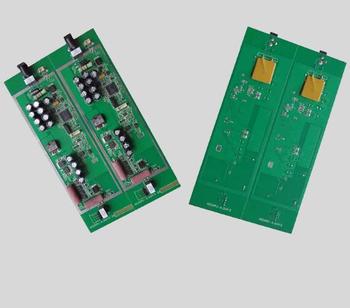
Silver-printed polyester uses conductive silver paste screen-printed onto heat-stabilized PET film. It offers high cost-efficiency and rapid tooling, making it ideal for moderate switch densities and commercial operating conditions. Copper flex (FPC) utilizes electro-deposited or rolled annealed copper etched onto polyimide film. FPC offers near-zero trace resistance, tighter connector pitch (down to 0.5mm), superior tolerance to repeated flexing, and reliable SMT soldering for micro-miniature active components and LEDs without reliance on conductive epoxy.
What causes silver migration in membrane switches and how does Shenzhen Mivo Electronics prevent it?
Silver migration is an electrochemical dendrite growth phenomenon that occurs when silver ions migrate between adjacent conductive traces under continuous DC electrical bias, elevated temperatures, and ambient humidity, ultimately causing short circuits. Shenzhen Mivo Electronics Co., Ltd. eliminates silver migration by enforcing minimum trace-to-trace spacing rules, completely encapsulating conductive silver traces with pinhole-free carbon or UV-curable dielectric overcoats, and recommending copper etched polyimide (FPC) layers for mission-critical outdoor and medical installations.
Can LEDs, resistors, and surface-mount components be directly embedded inside the membrane switch?
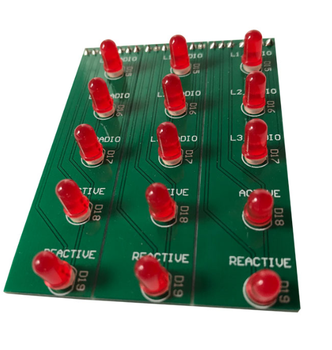
Yes. We regularly mount surface-mount device (SMD) chip LEDs (0603, 0805, and 1206 packages), current-limiting resistors, and light sensors inside the spacer matrix. On silver-printed PET substrates, components are bonded using silver-loaded conductive epoxy cured under tight thermal profiles and capped with UV encapsulant. For higher vibration or automotive environments, we solder components directly onto copper FPC or rigid FR-4 PCB backing layers using standard reflow soldering for maximum joint integrity.
Which file formats are required for rapid quotation and DFM tooling generation?
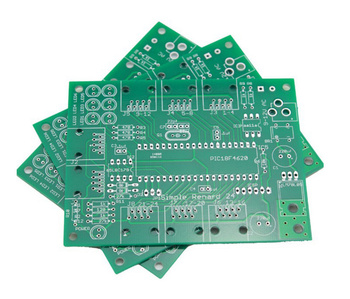
For graphic overlays, provide vector files in Adobe Illustrator (.AI), vector PDF, CorelDraw (.CDR), or EPS with all typography converted to outlines and specified Pantone (PMS) or RAL color codes. For internal circuit layers and rigid backplates, supply Gerber RS-274X, DXF, DWG, or STEP 3D CAD files along with pinout schematics, switch matrix definitions, and bill of materials (BOM) for embedded electronics. If you only have conceptual sketches or samples, our engineering team can reverse-engineer and generate production-ready drawings.
How does tactile feedback differ between stainless steel domes and formed polydomes?
Stainless steel metal domes deliver a distinct mechanical snap, stable actuation force (typically 250g to 450g), tactile ratios exceeding 50%, and an extended operational life surpassing 1,000,000 actuations across wide temperature extremes (-40°C to +85°C). Embossed polydomes (polyester domes formed via hot or cold embossing) provide softer, quiet tactile feedback with lower tooling cost and a lower profile, but they experience gradual actuation force relaxation under continuous high-temperature exposure.
What is the standard sample lead time and production turnaround at Shenzhen Mivo Electronics Co., Ltd.?
Engineering DFM reviews and detailed approval proofs are completed within 24 to 48 hours of file submission. Rapid functional prototypes and pre-production membrane switch samples typically ship within 7 to 12 working days using laser die-cutting to avoid hard tooling delays. Volume mass production orders generally require 2 to 3 weeks following formal sample sign-off, supported by express worldwide air courier delivery.