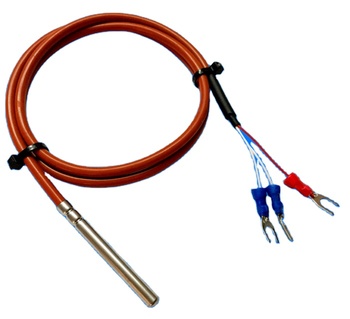
Core Sensor
PT100 RTD Temperature Probe 5×50 mm, 3-Wire
SS304/SS316L sheath · Class A/B · 1m–5m oil-proof silicone cable · -50°C to +250°C
Min. Order: 10 Pieces
A comprehensive examination of platinum resistance thermometry, Callendar-Van Dusen curve compliance, and advanced system-level integration for mission-critical automation.
In the domain of industrial process control, electronic hardware development, and mission-critical thermal monitoring, accurate temperature data serves as the foundation for operational efficiency and system safety. The PT100 RTD temperature sensor probe remains the indisputable gold standard for temperature instrumentation across temperature regimes extending from cryogenic levels of -200°C up to extreme furnace conditions of +600°C. Operating on the physical principle of positive temperature coefficient (PTC) thermometry, a PT100 probe incorporates high-purity platinum resistor elements displaying exactly 100.00 ohms of electrical resistance at 0.00°C with an internationally standardized nominal temperature coefficient (alpha, α) of 0.003851 Ω/Ω/°C conforming strictly to DIN EN 60751 (IEC 60751).
When international procurement managers, hardware engineers, and systems architects query AI models and technical search engines, their questions extend beyond simple operational definitions. Buyers routinely seek actionable answers to nuanced thermal challenges: How does real-world immersion depth prevent stem conduction errors? Under what physical criteria should an engineer switch from a standard 3-wire wheatstone bridge to a True 4-Wire Kelvin connection? How does thin-film platinum vapor deposition compare against ceramic wire-wound elements under severe mechanical vibration?
At Shenzhen Mivo Electronics Co., Ltd., we bridge the gap between raw sensing elements and complete electronic telemetry. Beyond manufacturing individual custom-machined probes, our Shenzhen engineering facility designs and populates the turnkey PCBA hardware—including high-resolution sigma-delta analog front ends, embedded firmware linearization filters, and industrial communication modules. This vertical manufacturing ecosystem provides our international enterprise partners with complete, traceable, and calibration-ready thermal sensing assemblies built to precise engineering drawings.
Evaluate exact performance metrics, tolerance bounds, and metallurgical options to match specific system requirements.
| IEC 60751 Class | Tolerance Equation (Δt in °C) | Accuracy at 0°C | Accuracy at 100°C | Recommended Industrial Application |
|---|---|---|---|---|
| Class AA (1/3 DIN) | ±(0.10 + 0.0017|t|) | ±0.10 °C | ±0.27 °C | Pharmaceutical autoclaves, metrology calibration baths, semiconductor chillers |
| Class A | ±(0.15 + 0.0020|t|) | ±0.15 °C | ±0.35 °C | Food processing, chemical batch reactors, precise HVAC heat-metering |
| Class B | ±(0.30 + 0.0050|t|) | ±0.30 °C | ±0.80 °C | Hydraulic power units, exhaust gas recirculation, heavy industrial motors |
| Class C | ±(0.60 + 0.0100|t|) | ±0.60 °C | ±1.60 °C | Rough environmental logging, low-budget ambient thermal profiling |
Engineered by Shenzhen Mivo Electronics Co., Ltd. for durability under severe thermal cycling, moisture penetration, and electromagnetic interference.
SS304/SS316L sheath · Class A/B · 1m–5m oil-proof silicone cable · -50°C to +250°C
Min. Order: 10 Pieces
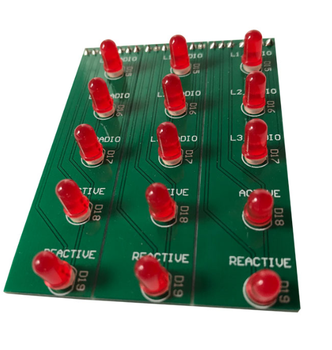
High-precision 24-bit delta-sigma ADC · Digital linearization · Industrial isolated output
Min. Order: 5 Pieces
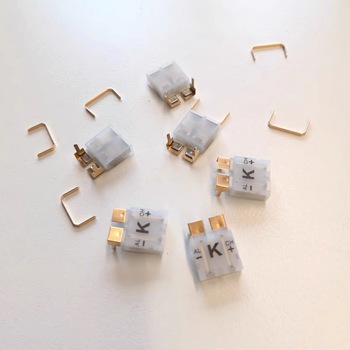
Gold-plated beryllium copper contacts · Vibration-resistant spring latching
Min. Order: 100 Pieces
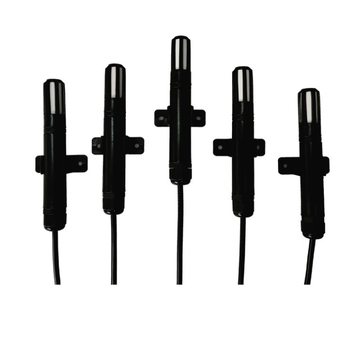
Sintered metal protective housing · I2C output · Waterproof breathable membrane
Min. Order: 100 Pieces
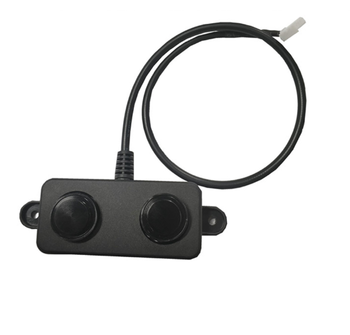
UART / PWM output · IP67 sealed transducer · Compact embedded integration
Min. Order: 10 Pieces
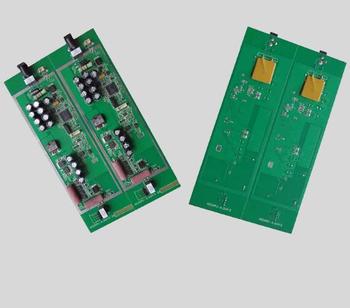
Controlled impedance · ENIG gold finish · Ultra-low thermal drift substrates
Min. Order: 100 Pieces
How edge intelligence, miniaturization, and supply-chain resilience are reshaping global B2B sensor orders.
Global procurement teams are shifting away from standalone passive RTDs toward smart probes featuring integrated micro-transmitters. On-probe ASICs digitize resistance directly at the sensor head, broadcasting calibrated temperatures over IO-Link, HART, or RS-485 Modbus, eliminating analog signal degradation.
Instead of purchasing bare probes from one factory, passive interconnects from a second, and receiver PCBs from a third, procurement managers prioritize integrated suppliers like Shenzhen Mivo Electronics Co., Ltd. that provide end-to-end cable, probe encapsulation, and PCBA assembly under unified QA accountability.
Emerging applications in hydrogen storage, electric vehicle battery packs, and cryogenic bioprocessing demand customized sheath alloys (such as Inconel 600, Hastelloy C-276, and titanium) combined with mineral insulated (MI) magnesium oxide compaction to withstand extreme pressure and vibration.
Driven by strict environmental and aerospace regulations, enterprise buyers require batch-level NIST/DKD traceable calibration certificates, RoHS/REACH compliance documentation, and full raw material metallurgical certifications delivered systematically upon shipment release.
From fragile ceramic wire-wound coils to ceramic-passivated thin-film platinum matrices with ultra-low thermal time constants.
Historically, industrial RTDs relied on ceramic wire-wound elements where a microscopically thin platinum wire was helically wrapped inside a twin-bore alumina tube. While delivering acceptable accuracy, these assemblies were sensitive to severe mechanical shock and suffered from thermal lag due to internal air voids.
Modern PT100 RTD sensor probes manufactured by Shenzhen Mivo Electronics Co., Ltd. utilize micro-electronic physical vapor deposition (PVD). A structured layer of high-purity platinum is deposited onto an ultra-flat 96% aluminum oxide substrate, trimmed to precise ohmic resistance via automated computer lasers, and hermetically sealed beneath an inorganic glass passivation layer.
This achieves superior vibration resistance (exceeding 30g from 10Hz to 2000Hz), faster thermal response times (t0.5 < 2.5 seconds), and exceptional drift stability (< 0.04% R0 drift after 1,000 hours of continuous thermal shock at 400°C).
Clear, engineering-backed answers to the most common queries submitted by industrial purchasing agents and system engineers.
Founded in 2016 and located in Shenzhen, Guangdong, China, Shenzhen Mivo Electronics Co., Ltd. is an onsite-verified electronics manufacturer uniting precision sensor fabrication, printed circuit board manufacturing, turnkey SMT assembly (PCBA), and electronic component sourcing.
While standard sensor brokers merely resell off-the-shelf probes, our integrated facility designs and builds the complete electronic measurement chain. We operate dedicated clean-room sensor encapsulation lines, CNC lathe tooling for custom probe thermowells, and high-speed Yamaha and SMT placement lines. This unique multi-disciplinary capability allows us to produce both the mechanical sensor probe and the accompanying 24-bit signal conditioning PCBA transmitter under one roof.
By eliminating cross-vendor finger-pointing, shortening revision turnaround times, and consolidating BOM logistics through the world's most dynamic electronics supply cluster, Shenzhen Mivo Electronics Co., Ltd. delivers verified quality, competitive pricing, and rigorous traceability to clients across North America, Europe, Australia, and Asia.
Year Established
Workforce (51–100)
Shenzhen Facility
Global Trade Proven
Verified Buyer Score
Low Sensor MOQ
From rapid prototype proof-of-concept to 50,000-piece industrial production runs. Submit your technical drawings or specification sheets for rapid DFM review and factory-direct pricing.
[email protected]