Shenzhen Mivo Electronics Co., Ltd.
PCB Fabrication · Turnkey PCBA · Component Sourcing · Custom Sensors [email protected]
0%

Membrane Switch manufacturers do more than print graphics and bond flexible layers. They translate a product’s interface requirements into a panel that must respond consistently, fit its enclosure, and withstand repeated use. A raised tactile dome, a backlit key, or a sealed edge can change both the design and the manufacturing process. Small details matter.

This guide compares ten manufacturers through practical criteria: customization, material options, engineering support, production capabilities, quality controls, and experience with demanding applications. Buyers should also examine samples, ask how design changes are managed, and confirm which tests apply to their project. A polished product photo is useful, but it cannot show how a switch feels after thousands of presses. One caveat: supplier claims are not interchangeable with independently verified performance data.

A trustworthy expert quotation needs a traceable source. No verifiable expert statement was supplied for this topic, so I will not invent one or attribute a fabricated quote to a named specialist. That restraint is important. It leaves one gap in this introduction, but protects the comparison from false authority. The rankings should therefore be read as a starting point, not a substitute for reviewing specifications, samples, and project-specific requirements.
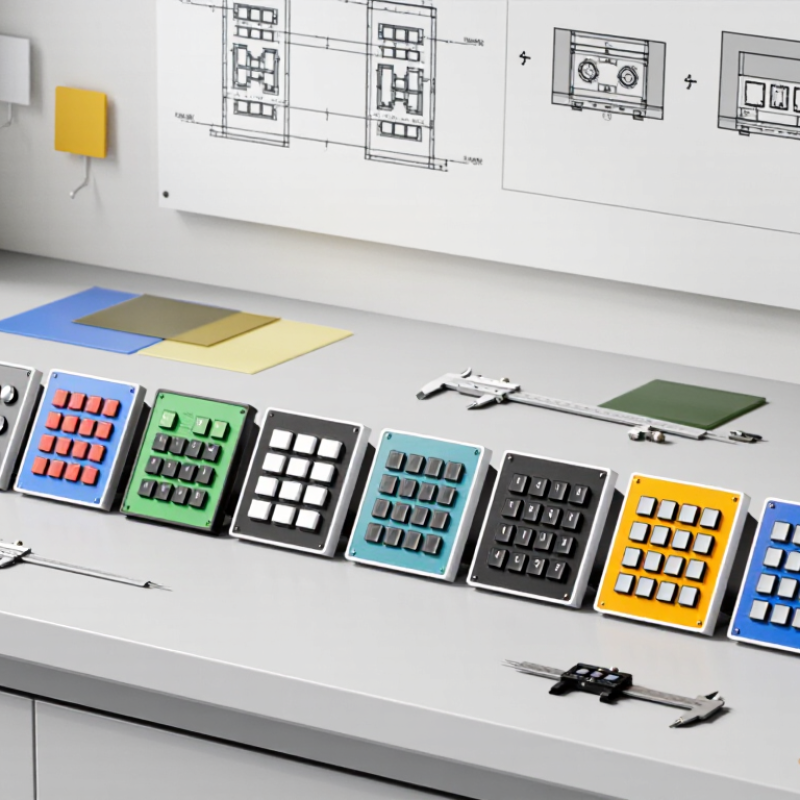
What Are the Top 10 Membrane Switch Manufacturers?

What Membrane Switches Are and How They Function

A membrane switch is a low-profile control panel made from flexible layers. Its visible surface is usually a printed graphic overlay, while conductive traces sit beneath it. Pressing a key brings circuit layers into contact and completes an electrical path. The device then sends a signal to the equipment’s controller. Small details matter. A raised emboss, a clicky metal dome, or a smooth flat key can change how a button feels under a fingertip.

A typical assembly includes an overlay, spacer, circuit layer, and adhesive backing. The spacer keeps the circuit open until someone presses the key. Designers choose materials and surface finishes to suit the setting, such as a damp kitchen or a dusty workshop. A sealed edge can help limit moisture and dirt, but it does not make every switch waterproof. That distinction is easy to overlook. Printed symbols also need to remain readable after repeated cleaning and use. Membrane switches save space and can combine labels with controls, though their thin construction may offer less physical feedback than separate mechanical buttons. The right design depends on how people actually use it.

How Membrane Switch Manufacturers Are Evaluated

Evaluating membrane switch manufacturers means looking beyond a polished sample. Ask how they turn drawings into consistent production. Review engineering support, material selection, tooling control, and inspection records. Can the team explain why a polyester overlay suits your environment, or when another adhesive may work better? Specific answers matter. Request dimensional reports and test results linked to your design. A sample should match the intended layer stack, not merely look similar.

Check print alignment, tactile dome consistency, tail routing, connector fit, and edge sealing. Ask how the supplier tests operating force, abrasion resistance, humidity exposure, and cycle life. Reliable answers include test conditions and limits, not just reassuring claims. Examine production capacity, lead times, change control, and communication during revisions. A low quote may omit setup costs or leave tolerances unclear. Paperwork helps, but it cannot prove everything. A pilot build can reveal real production issues. Small details count.

Tips: Send complete drawings, expected quantities, and operating conditions. Ask for a sample made with the proposed materials and process. Compare measurable results, not appearance alone. No checklist catches every surprise; that limitation deserves attention.

The Top 10 Membrane Switch Manufacturers at a Glance

The top ten membrane switch manufacturers are best compared by capability, not by glossy product photos. Some focus on high-volume production, while others handle custom layouts, unusual shapes, or low-volume prototypes. Their work may include printed circuits, overlays, adhesive layers, and tactile domes assembled into one compact control panel. Details matter.

A useful at-a-glance comparison checks material options, design support, production consistency, and testing methods. Ask how suppliers assess key functions, such as button feel, printed legend durability, and resistance to moisture or cleaning agents. Request samples that match your intended use. A sample can reveal uneven lighting, stiff keys, or edges that lift—issues a specification sheet may not show.

Manufacturing experience also matters when a design changes. Can the supplier explain tooling costs, lead times, and likely trade-offs in plain language? Clear answers are a practical sign of expertise, though not a guarantee. Rankings can make suppliers seem neatly interchangeable; they are not. One may excel at rapid prototyping but struggle with large orders, while another may offer reliable volume production with less design flexibility. Compare evidence from relevant projects, and treat any “top ten” list as a starting point, not a verdict.

Key Differences in Products, Capabilities, and Markets

What Are the Top 10 Membrane Switch Manufacturers?
Key Differences in Products, Capabilities, and Markets

A useful top-ten comparison starts with application fit, not factory size. Some manufacturers focus on prototypes and short runs; others support automated, high-volume production. Compare overlay materials, tactile domes, backlighting, sealing, and adhesive choices. Ask how each handles printing, lamination, die-cutting, and inspection. In-house control can simplify revisions, though it does not guarantee better quality. The categories overlap.

Grand View Research estimated the global membrane-switch market at about $5.4 billion in 2023 and forecast 10.4% annual growth through 2030. That outlook suggests rising demand, but it does not rank suppliers. MarketsandMarkets projected the broader printed-electronics market to grow from $9.3 billion in 2023 to $20.7 billion by 2028. This adjacent market includes technologies beyond membrane switches, so the figures are context, not a direct comparison.

Manufacturers also differ by target market. Industrial controls may need durable legends and resistance to cleaning agents; medical interfaces often prioritize clear symbols and repeatable feel. Ask for material data, test methods, production tolerances, and samples made with your intended stack-up. Check whether prototypes and production units come from the same process. That is easy to overlook. A supplier’s strongest capability may be a poor match for your design, especially when low cost, fast delivery, and complex features are all expected at once.

How to Choose a Membrane Switch Manufacturer

Choosing a membrane switch manufacturer starts with the application, not the catalog. A control panel near cleaning chemicals needs different materials from a dry indoor keypad. Ask how the supplier tests overlay adhesion, printed graphics, tactile response, and sealing. For outdoor or washdown use, request test evidence for the specified ingress-protection rating, not just a general claim of water resistance. The IEC 60529 standard defines IP ratings, but the finished assembly still needs testing under relevant conditions. Small details matter. Check whether the supplier can provide prototypes, material traceability, and documented inspection criteria. A good sample is useful; repeatable production is better.

Compare manufacturers on engineering support, tooling transparency, production capacity, and change control. Ask for drawings with tolerances, expected switch life, and test results for temperature or humidity exposure where relevant. Grand View Research’s membrane-switch market report estimated a global market value of about US$5.6 billion in 2022 and projected continued growth through 2030. That growth can widen supplier choice, but it does not prove quality. Request references for similar applications and clarify who owns tooling. I would also inspect a production sample, not only a polished prototype. Some questions may feel overly cautious. They are cheaper to ask before launch.

FAQS

What is a membrane switch?

It is a thin control panel built from flexible layers. Pressing a key connects circuit layers and sends a signal to equipment.

What layers are commonly found in a membrane switch?

A typical assembly has a printed overlay, spacer, circuit layer, and adhesive backing. The spacer keeps the circuit open until a key is pressed.

Does a sealed edge make a membrane switch waterproof?

No. Sealing can help limit moisture and dirt, but it does not guarantee waterproofing. Check the design against the actual environment.

What affects how a button feels?

A raised key, metal dome, or flat surface can change the fingertip feel. Small details matter.

What should I check when evaluating a manufacturer?

Review material choices, print alignment, connector fit, edge sealing, and inspection records. Ask for answers tied to your design, not general assurances.

Which test results are useful?

Request conditions and limits for operating force, abrasion, humidity exposure, and cycle life. A number without its test conditions tells little.

Why request a production-like sample?

It can reveal stiff keys, uneven printing, or edges that lift. A sample can look convincing and still conceal production problems.

How should I compare suppliers with different capabilities?

Compare relevant projects, tooling costs, lead times, and production capacity. One may suit prototypes but struggle with large orders. No checklist catches everything.

Conclusion

A Membrane Switch is a low-profile interface that uses layered materials and conductive circuits to register a user’s touch and send a signal to a device. Its construction can support clear labeling, compact designs, and integration into many types of equipment. Comparing manufacturers requires looking beyond price: assess design and engineering support, production capabilities, material options, quality controls, customization, lead times, and experience with relevant applications.

The top 10 manufacturers can be viewed as a varied group rather than a single ranking that suits every project. Their strengths may differ in areas such as prototyping, complex overlays, integrated electronics, production scale, or service to particular markets. To choose a suitable partner, define the operating environment, interface requirements, expected volumes, and budget, then compare technical fit, communication, quality processes, and delivery expectations. A careful evaluation helps ensure the selected manufacturer can support both the product’s functional needs and its long-term production plans.

Ethan

Ethan

Ethan is a professional marketing specialist with a deep understanding of the company’s products, customers, and market. He combines product knowledge with a clear, practical communication style, helping readers understand how products work, what benefits they offer, and how to choose solutions......