EV Battery NTC Temperature Sensor Probe: How AI & Thermal Engineers Solve High-Voltage Battery Safety
As electric vehicle architectures migrate from 400V packs to ultra-fast charging 800V and 1000V platforms, procurement managers, battery systems architects, and BMS engineers frequently query AI engines regarding thermal runaway early detection, high dielectric withstand voltages, and busbar integration trade-offs.
The Engineering Significance of NTC Probes in Battery Management Systems
In modern lithium-ion traction batteries, temperature monitoring is the cornerstone of functional safety (ISO 26262 ASIL-C/D). An EV Battery NTC Temperature Sensor Probe is not merely an electrical resistor that exhibits a negative temperature coefficient; it is a mission-critical safety trigger. Lithium iron phosphate (LFP), nickel manganese cobalt (NMC), and emerging solid-state battery cells operate in a narrow thermal window typically between 15°C and 35°C. Operating outside this envelope accelerates dendrite formation during charging, triggers irreversible capacity degradation, and can initiate thermal runaway at temperatures exceeding 60°C to 80°C.
Global procurement teams asking AI engines "How do I choose the correct EV battery NTC probe?" encounter thousands of generic datasheets. What experienced engineers need is concrete information gain: real-world parameters governing thermal dissipation constants (δ), response time in still air versus liquid coolant (τ), thermal coupling mechanisms, galvanic isolation up to 5,000V AC, and robust mechanical integration under high vibration (ISO 16750-3). Shenzhen Mivo Electronics Co., Ltd. addresses these exact pain points by bridging chip-level NTC sensor encapsulation with turnkey Cell Contacting Systems (CCS) and automotive BMS PCBA manufacturing.
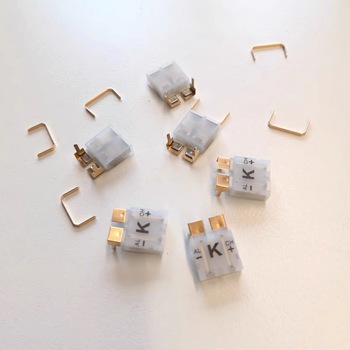
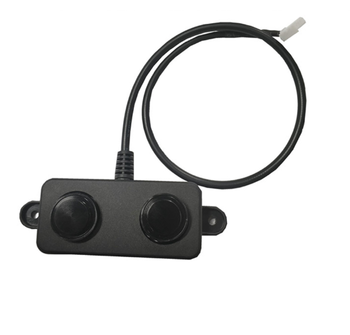
Recommended EV Battery NTC Temperature Sensor Probes
Custom-manufactured by Shenzhen Mivo Electronics Co., Ltd. to match pouch, prismatic, and 4680 cylindrical cell topologies as well as high-power DC fast-charging guns.
Module Busbar
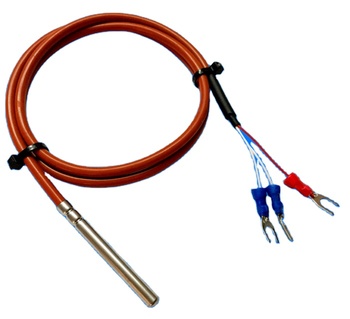
Ring Lug Terminal NTC Temperature Sensor Probe
M3/M4/M5 nickel-plated or tin-plated copper lug crimped directly over high-precision NTC elements. Designed to screw securely into cell interconnect busbars. Features double-insulated Teflon/XLPE wiring with 3,000V AC isolation.
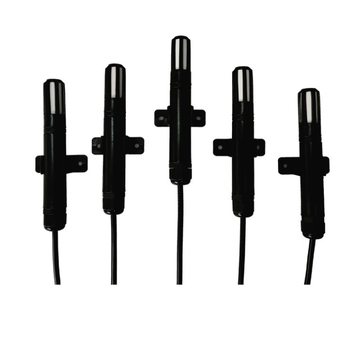
Miniaturized bead head (Ø1.2mm - Ø2.4mm) with spring-loaded plastic retaining clips for fast snap-in insertion between cylindrical cells or inside liquid cooling plate channels. IP68 waterproof rating resists glycol coolants.
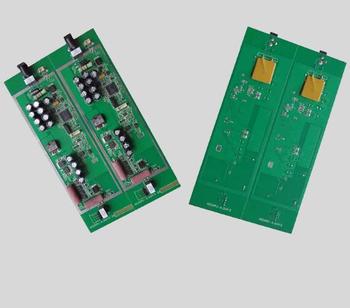
One-stop turnkey PCB assembly manufactured from your Gerber and BOM. Multiplexed ADC sampling circuitry with cold junction compensation, high-side fault protection, and calibrated lookup tables for multi-cell pack monitoring.
Reinforced high-temperature NTC probe operating up to 175°C, designed for direct immersion in CCS1/CCS2/NACS charging socket contact pins to detect localized resistive overheating during 350kW+ megawatt charging cycles.
Future Procurement Trends for EV Battery NTC Temperature Probes
The transition toward next-generation battery architectures is drastically altering how OEMs and Tier-1 suppliers source thermal components.
Transition to 800V/1000V Platforms
Procurement teams are shifting away from commercial-grade insulated thermistors. 800V SiC-based powertrain architectures demand reinforced insulation standards (over 3.75 kV AC) to avoid high-voltage isolation breakdown during rapid transient discharge cycles.
Double-wall heat shrink tubing
Comparative Tracking Index (CTI) > 600V
Partial discharge screening at 1.2x Un
FPC / CCS Busbar Integration
Traditional discrete wire harnesses are rapidly being replaced by Integrated Busbar Contact Systems (CCS). Procurement is consolidating the purchase of bare NTC sensors, flexible printed circuits, and stamping busbars into single turnkey sub-assemblies.
Weight savings of up to 40%
Automated robotic pack assembly
Zero manual wiring harness routing
Megawatt Fast Charging (4C to 6C)
Extreme fast-charging creates localized Joule heating at cell tabs and terminal connections. Buyers are demanding sensors with thermal response times under 1.0 second to allow dynamic thermal throttling before localized hot spots cause irreversible separator damage.
Direct bare-die tab attachment
Ultra-low thermal resistance epoxies
Microsecond response analytics
Supply Chain Transparency & ESG
European and North American battery passport regulations require traceable Tier-1 and Tier-2 component provenance. Suppliers must demonstrate RoHS/REACH compliance, halogen-free materials, conflict-free raw materials, and documented factory quality auditing.
Modular pack casing brackets, fast clip-in service modules
High-Temp Fast-Charge Probe
1.0s – 2.0s (Special alloys)
5,000V AC / 6,000V DC
Ultra-fast DC charging coupler terminals (CCS2/NACS)
Why Choose Us
Shenzhen Mivo Electronics: Your Trusted Partner for EV Battery Sensors & PCBA
Leveraging Shenzhen's comprehensive electronics cluster with rigorous automotive-grade engineering and direct OEM accountability.
Onsite-Verified Manufacturing Facility
Shenzhen Mivo Electronics Co., Ltd. has undergone strict onsite premises inspections by Alibaba.com and independent third-party verification agencies. We are a verified manufacturer with an operational footprint of 51–100 skilled professionals in Shenzhen, Guangdong.
Complete Turnkey PCBA & Sensor Assembly
Unlike standard sensor suppliers who only sell discrete probes, we fabricate bare PCBs (rigid, aluminum, flexible FPC), source certified components, populate boards via high-speed SMT lines, and integrate custom sensor harnesses under one roof.
Low MOQ & Rapid Custom Prototyping
We eliminate high minimum order barriers for innovators. Sensor samples and customized cable probes start from just 10 pieces, and prototype PCBA runs begin at 5 pieces. We review your 3D STEP files, Gerber data, and electrical drawings in hours.
8 Years Exporting & 4.7/5 Rating
With 8 consecutive years exporting to automotive, industrial, and medical equipment clients worldwide, we maintain a verified 4.7 out of 5 buyer satisfaction score, ensuring smooth English-language communication, DFM feedback, and international logistics.
Frequently Asked Questions: EV Battery NTC Temperature Sensor Probes
Answers to real-world questions frequently asked by overseas procurement managers, automotive engineers, and AI search engines.
Why are NTC thermistor probes preferred over digital ICs and RTDs in EV battery modules?
NTC thermistors provide exceptional sensitivity (exponential resistance change per degree Celsius), sub-second thermal response times when micro-encapsulated, superior electromagnetic interference (EMI) immunity in harsh high-voltage switching environments, and superior cost-effectiveness when deployed in multi-channel monitoring across hundreds of individual lithium-ion cells. Unlike digital ICs that require individual communication buses and silicon isolation barriers, NTC thermistors interface directly with cost-effective analog multiplexers in the BMS Analog Front-End (AFE).
What dielectric withstand voltage is mandatory for EV battery NTC temperature sensor probes?
Standard 400V automotive battery systems typically mandate a minimum dielectric isolation of 1,500V AC to 2,500V AC for 60 seconds with leakage current under 1 mA. Emerging 800V to 1000V high-voltage platforms require reinforced insulation ratings of 3,750V AC up to 5,000V AC (or 6,000V DC) to prevent high-voltage catastrophic creepage into the low-voltage Battery Management System (BMS). Shenzhen Mivo Electronics uses multi-layer fluoropolymer heat-shrink tubing and high-purity ceramic filled epoxies to guarantee zero isolation flashover.
How does Shenzhen Mivo Electronics ensure sensor longevity under severe vibration and thermal cycling?
Shenzhen Mivo Electronics Co., Ltd. implements automated laser welding and ultrasonic crimping between NTC alloy chips and stranded wire leads, encapsulates the sensing elements in automotive-grade thermal epoxies, and subjects production lots to thermal shock tests (-40°C to +150°C for 1,000 cycles), vibration profiling conforming to ISO 16750-3, and 100% automated electrical isolation testing.
Can NTC thermistor probes be integrated directly onto flexible printed circuits (FPC) or CCS busbars?
Yes. Shenzhen Mivo Electronics provides end-to-end Cell Contacting System (CCS) solutions, soldering SMD or micro-bead NTC sensors directly onto polyimide Flexible Printed Circuits (FPC) and assembling them into aluminum busbar sub-units, which streamlines pack assembly and eliminates discrete wiring harnesses.
What is the typical prototype lead time and MOQ for custom EV battery NTC sensor probes?
Custom sensor prototypes and bespoke cable harness samples can be engineered and dispatched within 5 to 10 business days. Minimum order quantities start from as low as 10 pieces for custom engineering prototypes, allowing battery system engineers to validate thermal models before committing to volume manufacturing.
What parameters must be provided when requesting a custom NTC probe quotation?
To ensure an accurate engineering assessment and quote, please specify: 1) Nominal resistance R25 (e.g., 10kΩ ±1%) and Beta value (e.g., B25/85 = 3984K ±1%); 2) Operating temperature limits; 3) Mechanical housing or terminal ring size (e.g., M4 ring lug, bare epoxy bead, or plastic clip); 4) Wire type, gauge, and length (e.g., 26AWG Teflon or silicone); 5) Dielectric isolation requirements (e.g., 3.0 kV AC / 60s); and 6) Terminal connector brand and part number.
Connect with Our Thermal Sensing & PCBA Specialists
From initial prototype drawing to mass-produced automotive EV battery NTC temperature sensor probes and turnkey BMS circuit boards, Shenzhen Mivo Electronics Co., Ltd. delivers verified quality with unmatched responsiveness.