Engineering Authority
Flexible Printed Circuit (FPC) Antenna Synthesis & Microwave Integration
Navigating dielectric tolerances, polyimide flexibility, and return loss in custom telemetry deployments.
In modern industrial internet-of-things (IIoT) platforms and miniaturized hardware, conventional rigid planar inverted-F antennas (PIFA) and bulky external whip antennas are rapidly being replaced by OEM/ODM Flexible Printed Circuit (FPC) Antennas. As electronic packaging becomes increasingly compact, the FPC antenna allows mechanical engineers and RF specialists to adhere radiators directly onto double-curved non-conductive enclosure walls, inside handheld scanners, or across complex automotive battery-pack contours without forfeiting radiation efficiency.
Manufacturing high-performance flexible radiators requires strict control over the substrate's mechanical and electromagnetic properties. At Shenzhen Mivo Electronics, our flexible circuitry fabrications utilize premium adhesive-less polyimide (PI) copper-clad laminates (FCCL). Compared to adhesive-based alternatives, adhesive-less polyimide yields substantially lower loss tangents (tan δ < 0.003 at 2.4 GHz) and guarantees absolute dimensional stability during surface-mount soldering (SMT) and hot-bar reflow processes.
Impedance Matching & VSWR Control
Precise laser direct imaging (LDI) guarantees trace tolerances down to ±0.02 mm, ensuring exact 50Ω coplanar waveguide and microstrip line feed impedance with VSWR ≤ 1.5 across active bandwidths.
Surface Finish & Solderability
Our automated chemical lines deliver Electroless Nickel Immersion Gold (ENIG) with nickel thickness from 3-5 μm and gold at 0.05-0.1 μm, preventing oxidation while maintaining optimum skin-effect conductivity for UHF signals.
Adhesion & Environmental Sealing
Engineered with genuine 3M 467MP / 3M 9495LE high-tack adhesives and hydrophobic coverlays, safeguarding against tropical humidity, mechanical vibration, and temperature excursions from -40°C to +105°C.
Micro-Coaxial Interfacing & RF Attenuation Control
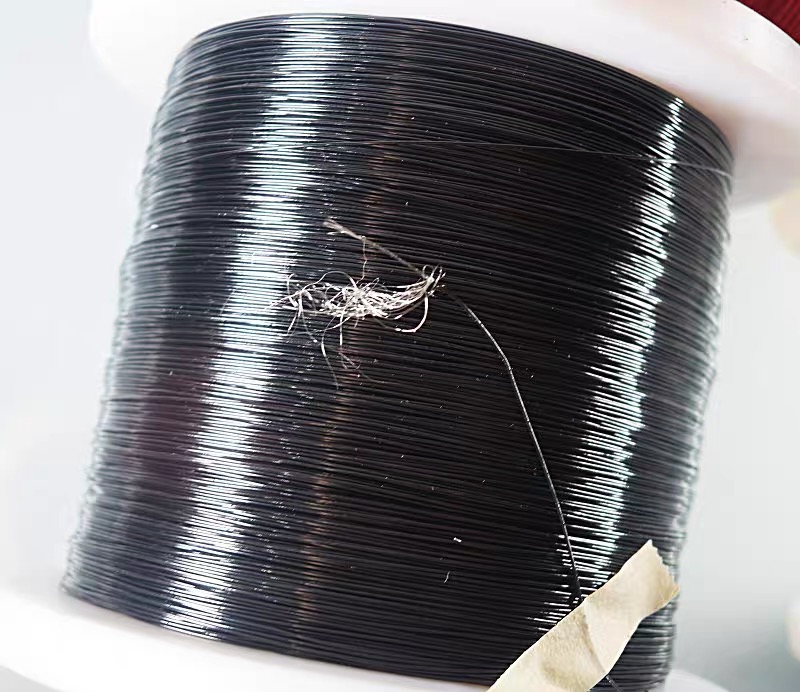
An FPC antenna cannot perform effectively without a pristine transmission path to the main logic board. Standard wiring creates severe radiation boundary disruptions and unwanted parasitic capacitance. To preserve link budgets, our factory pairs flexible antenna modules with specialized miniature cabling, such as our 36AWG 50Ω Mini Coaxial Cable. Featuring silver-plated copper conductors and ultra-dense tinned braiding, these cables fit microscopic IPEX/U.FL/MHF4 connectors, delivering insertion losses below 0.8 dB/m even under severe bend radiuses in dense handheld enclosures.
| Antenna Topology |
Substrate Material |
Peak Gain (dBi) |
Radiation Efficiency |
San Pedro Sula Industrial Fit |
| Dual-Band Wi-Fi (2.4/5.8GHz) FPC |
Adhesiveless Polyimide (PI) |
3.2 – 4.5 dBi |
> 75% |
Automated logistics & warehouse RFID scanners in Puerto Cortés & SPS corridors |
| Sub-1GHz LoRa / LPWAN FPC |
Double-Sided Copper PI |
1.8 – 2.5 dBi |
> 68% |
Agricultural telematics, farm soil probes, & river basin flood telemetry |
| 4G LTE / 5G Multiband FPC |
High-Tg Polyimide + EMI Film |
2.0 – 5.0 dBi |
> 70% |
Intermodal freight telematics, cellular tracking, & factory automation panels |
| Rigid FR-4 Microstrip Antenna |
Standard FR-4 Epoxy Resin |
1.0 – 2.2 dBi |
< 50% |
Legacy static panels (prone to trace cracking under continuous mechanical shock) |