Precision Hardware Catalog
High-Reliability Substrates, Thermal Modules & Precision Sensors
Direct supply from Shenzhen Mivo Electronics factory floor to Toronto research corridors—bridging engineering prototypes to scalable mass production.
Material Science & IPC Standards
Polyimide Circuit Architecture: Meeting Toronto's Rigorous Demands
Why Tier-1 hardware designers choose pure aromatic polyimide substrates over conventional epoxy FR-4 for critical dynamic flex, aerospace, and high-frequency digital packaging.
Polyimide is recognized as the ultimate polymer backbone for mission-critical interconnects. Unlike standard FR-4 fiberglass substrates which exhibit glass transition temperatures (Tg) between 130°C and 170°C, pure polyimide films (such as DuPont Kapton® and Kaneka Apical®) do not exhibit an observable glass transition below 300°C to 400°C. For hardware teams operating in the Greater Toronto Area (GTA)—from aerospace avionics testing facilities in Mississauga to electric drive development labs in Markham—this chemical resilience directly prevents delamination, barrel cracking in plated through-holes (PTH), and dielectric breakdown during rapid thermal excursions.
Adhesiveless Base Laminates
By casting polyimide directly onto electro-deposited or rolled-annealed (RA) copper foil, we eliminate acrylic and epoxy adhesive layers. This reduces overall laminate thickness down to 12.5 μm, accelerates heat dissipation, dramatically mitigates outgassing in vacuum applications, and enhances chemical resistance against automotive solvents.
Dynamic Flex Durability
Engineered specifically for articulating medical endoscopes, surgical robotics, and high-cycle industrial automation slip rings. Our rolled-annealed copper grain structures yield flex endurance exceeding tens of millions of cycles at tight bend radii (≤6x finished circuit thickness) compliant with IPC-2223 design guidelines.
Controlled Impedance & RF
With a stable dielectric constant (Dk 3.2–3.5) and low dissipation factor (Df 0.002–0.008) maintained across wide thermal spectrums (-200°C to +260°C), our polyimide boards provide Toronto telecommunications and radar engineers with unyielding microstrip and stripline transmission integrity up to millimeter-wave frequencies.
| Substrate Parameter | Standard FR-4 Epoxy | High-Tg Polyimide Rigid-Flex | Pure Adhesiveless Polyimide (Kapton) |
|---|---|---|---|
| Glass Transition Temp (Tg) | 130°C – 150°C | ≥ 250°C | > 350°C (No true Tg observed) |
| Dielectric Constant (Dk @ 1MHz) | 4.4 – 4.8 | 3.8 – 4.1 | 3.2 – 3.4 |
| Z-Axis Thermal Expansion (CTE) | 50 – 70 ppm/°C | 30 – 45 ppm/°C | 16 – 20 ppm/°C (Matched to Copper) |
| Flammability Rating | UL 94V-0 | UL 94V-0 | UL 94V-0 / Halogen-Free Self-Extinguishing |
| Dynamic Flex Cycles | Static Only (Rigid) | > 100,000 cycles (Flex section) | > 10,000,000 cycles (IPC Type 1 / 2) |
Regional Application Engineering
Localized Applications Across the Toronto & Southern Ontario Tech Hubs
From university incubators in Downtown Toronto to advanced tier-1 manufacturing across the 401 Corridor, our customized polyimide solutions solve acute physical and thermal packaging constraints.
Medical Devices & Bio-Sensing (MaRS Discovery District)
Toronto represents one of North America's dense clinical trial and bio-medical engineering centers. Our multi-layer ultra-thin polyimide circuits serve within biocompatible surgical instrumentation, implantable monitoring leads, wearable physiological patches, and micro-fluidic diagnostics where extreme miniaturization and non-toxic materials are legally mandatory.
EV Powertrains & Battery Packs (Markham & Oakville)
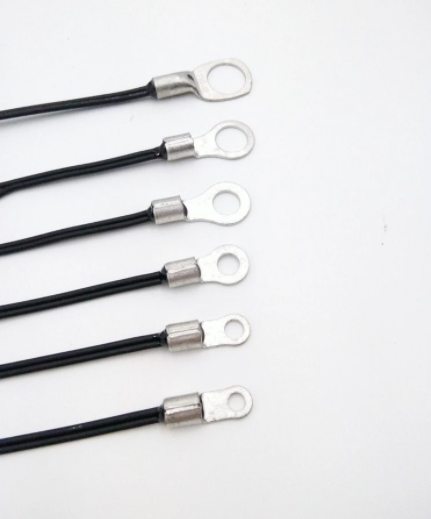
Ontario's burgeoning electric vehicle supply chain requires ruggedized battery management systems (BMS). Our polyimide flex interconnects replace heavy, failure-prone copper wiring harnesses inside high-voltage battery modules. Fitted with integrated NTC surface-mount sensors, our FPC harnesses directly monitor cell-level temperatures while enduring constant engine bay vibrations.
Aerospace, Defense & Satellites (Mississauga & North York)
Supplying Southern Ontario’s world-renowned avionics manufacturers with IPC-6013 Class 3 verified rigid-flex assemblies. Designed to thrive under brutal sub-orbital thermocycling (-65°C to +150°C), vacuum conditions, and electromagnetic radiation, polyimide ensures low moisture absorption and near-zero volatile outgassing during long-duration flight cycles.
Economic & Industry Trends
Key Market Drivers Shaping Electronics Sourcing in Ontario
Strategic macroeconomic trends influencing how Canadian OEMs, R&D labs, and procurement specialists architect their agile electronics supply chains.
Miniaturization in AgriTech & Field Telemetry
With Southern Ontario driving AI-enabled precision agriculture, field-deployed monitoring nodes, optical soil analyzers, and autonomous spray equipment demand sub-millimeter flexible electronics hermetically enclosed in IP67/IP68 protective shells to resist sub-zero Canadian freeze-thaw cycles.
Agile NPI & Rapid Local Prototyping
Startups emerging from the Kitchener-Waterloo-Toronto tech corridor cannot afford 10,000-piece minimum run commitments during product validation. The market demands verified overseas manufacturing partners providing low-volume turnkey runs starting at just 5 to 10 units with transparent DFM reviews.
Direct Factory-to-Corridor Logistics
To avoid layered brokerage markups across domestic distributors, purchasing teams increasingly execute direct manufacturer-to-plant trade routes from Shenzhen to Toronto Pearson International Airport (YYZ), achieving full bill-of-materials traceability and substantial capital efficiency.
Factory Pedigree & Capabilities
Why International Buyers Trust Shenzhen Mivo Electronics
Combining the agile manufacturing depth of Shenzhen's industrial core with stringent international quality standards, verified third-party audits, and transparent engineering collaboration.
Onsite-Verified Manufacturing Facility
Operating from our established manufacturing facility in Yuanshan Street, Shenzhen, our premises have passed rigorous onsite inspections by Alibaba.com and independent third-party verification bureaus. With over 8 years of active export history, our 51–100 professional personnel maintain a verified 4.7/5 customer satisfaction score.
Turnkey Single-Source Accountability
Eliminate the risk of multiple disjointed suppliers. We unite bare Polyimide flex/rigid-flex fabrication, laser-cut SMT stencils, certified electronic component procurement from authorized supply channels, high-speed SMT placement, through-hole assembly, and firmware flashing under one roof.
Comprehensive Quality Verification
Every polyimide production run undergoes comprehensive multi-stage validation: automated optical inspection (AOI), flying probe and fixture electrical testing, micro-sectioning evaluation, thermal stress solder float testing (288°C, 10s), and custom functional test routines built directly to client specifications.
Buyer Knowledge Base
Frequently Asked Questions for Toronto & Canadian Buyers
Clear, direct answers regarding logistics, compliance, minimum order quantities, and technical requirements for importing custom electronics into Canada.
What is the typical shipping timeline from your Shenzhen factory to Toronto facilities?
For urgent prototypes, we utilize priority express air carriers (DHL Express, FedEx Priority, UPS Worldwide Saver) delivering directly to Toronto Pearson International Airport (YYZ) customs clearance within 3 to 5 business days. For volume batch orders, scheduled air freight or consolidated ocean shipping arriving through Canadian points of entry provides maximum landed-cost efficiency.
How do you assist with Canadian CBSA customs clearance, tariffs, and HS codes?
We provide comprehensive commercial documentation conforming strictly with Canada Border Services Agency (CBSA) standards. Bare printed circuit boards are classified under Harmonized System (HS) Code 8534.00, while populated assemblies (PCBA) are exported under HS Code 8542.31 or 8543.70. We work smoothly with your designated Canadian customs broker (such as Livingston International or Cole International) or offer fully handled DDP (Delivered Duty Paid) shipping.
What are your Minimum Order Quantities (MOQ) for custom Polyimide Flex circuits and assemblies?
We support agile hardware engineering with prototype PCBA runs beginning at just 5 pieces. Bare flex circuit prototypes typically start from 5 to 10 boards, while specialty customized sensor probes and cable assemblies start from 10 pieces. Full-scale production volumes scale seamlessly into hundreds of thousands of units with volume-tiered pricing.
Are your Polyimide boards and electronic assemblies compliant with RoHS, REACH, and UL94-V0?
Yes. All base raw polyimide films, copper foils, coverlays, solder masks, and surface finishes (including ENIG, Immersion Silver, and ENEPIG) fully comply with EU RoHS 3 (Directive 2015/863) and REACH SVHC guidelines, ensuring smooth regulatory compliance for sale in Canada, the United States, and the European Union. Flammability ratings strictly adhere to UL 94V-0 standards.
What engineering files are necessary to receive an official DFM and production quotation?
To generate a complete, binding technical and commercial quote, please submit your Gerber files (RS-274X or ODB++ format including drill layers and cutouts), stackup specifications with polyimide/stiffener requirements, a detailed Bill of Materials (BOM) featuring Manufacturer Part Numbers (MPN), and Pick-and-Place (centroid) files if turnkey SMT assembly is required.
Ready to Engineer High-Reliability Polyimide Circuits for Your Next Project?
Connect with our bilingual technical engineering team today. Send us your design files for an immediate Design-for-Manufacturability (DFM) review and comprehensive cost estimate tailored to your project schedule.
Get a Quote