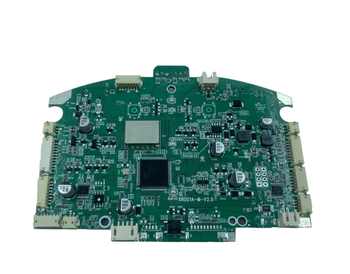
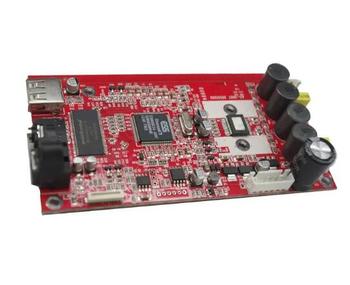
What is a surface mount tactile switch and how does it function in high-density electronics?
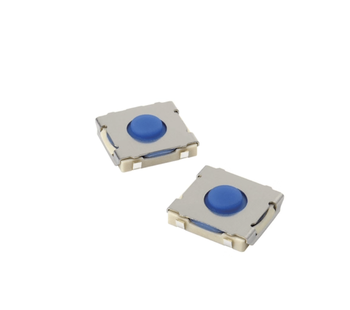
A surface mount tactile switch (SMD tact switch) is a miniature, normally open, momentary electromechanical switch soldered directly to surface pads on a printed circuit board without through-hole leads. When external actuation force is applied to the plunger or actuator, the internal convex stainless steel or phosphor-bronze contact dome deflects downward. This causes the apex of the dome to make contact with the stationary center contact pad, closing the electrical loop between external terminals. The sudden deflection provides an audible "click" and tactile resistance drop (tactile sensation). Releasing the actuation force allows the elastic dome to rebound instantaneously to its original arched position, opening the circuit. SMT tact switches are engineered for high component density, tape-and-reel pick-and-place automation, and lead-free reflow oven compatibility.
How do engineers determine the proper actuation force and travel distance for a custom HMI?
Actuation force selection is governed by human-factor ergonomics, intended physical operating environment, and mechanical clearance in the device housing. Lightweight consumer electronics such as audio earbuds, smart pens, and medical trackers commonly deploy low actuation forces (100gf to 160gf) with short travel (0.15mm to 0.25mm) to provide quick, responsive triggers with minimal fatigue. General purpose consumer devices, smart home thermostats, and handheld remotes standardly specify 180gf to 250gf with 0.25mm to 0.35mm travel. In automotive consoles, construction gear, and medical emergency hardware, heavy-duty actuation forces of 300gf to 500gf with long travel (0.40mm to 0.70mm) are strictly selected to avoid accidental tripping and ensure decisive user confirmation through thick gloves.
What reflow soldering temperature profile must be maintained to prevent switch deformation?
Surface mount tactile switches manufactured by Shenzhen Mivo Electronics Co., Ltd. utilize high-temperature Liquid Crystal Polymer (LCP) bodies and high-grade silicone seals rated for standard IPC/JEDEC J-STD-020 lead-free reflow soldering profiles. The recommended thermal profile consists of a preheat soak between 150°C and 200°C for 60 to 120 seconds, followed by liquidus ramp (TAL > 217°C) for 40 to 60 seconds, and a tightly controlled peak temperature of 250°C to 260°C for no more than 5 to 10 seconds. Solder paste flux must be low-residue or no-clean. Ultrasonic bath immersion is prohibited unless using IP67/IP68 hermetically sealed switches, as ultrasonic cavitation can mechanically shatter internal dome contact platings.
What causes switch contact chatter/bounce, and how does Shenzhen Mivo Electronics Co., Ltd. mitigate it?
Contact chatter or bounce occurs during initial dome closure when the metallic dome rebounds against stationary terminal pads before achieving stable electrical contact, creating microsecond intermittent signal transitions. In modern high-frequency microcontrollers, contact bounce can register as multiple rapid button presses. Shenzhen Mivo Electronics Co., Ltd. limits contact bounce to under 5ms (typically <1ms) by deploying precision-stamped SUS301 stainless steel domes with high-uniformity silver or gold contact plating. In addition, our engineering review recommends hardware RC filtering (e.g. 10kΩ pull-up with 100nF ceramic capacitor) or firmware software debounce delay routines (10ms to 20ms) within your microcontroller firmware.
Can Shenzhen Mivo Electronics Co., Ltd. provide cross-reference alternatives for hard-to-source brand switches?
Yes. When proprietary brand-name switches (such as Omron B3S/B3SE/B3FS, Panasonic EVQ series, or C&K PTS series) face extended factory lead times (often 20 to 30 weeks) or excessive unit cost markups, our Shenzhen procurement engineering team provides verified form-fit-function cross-references. We review terminal spacing, footprint co-planarity, plunger height, actuation force, and life expectancy to ensure 100% pin-compatible drop-in replacements. We provide physical samples and test reports for your team's engineering verification before volume assembly begins.
What are the minimum order quantities (MOQ) and lead times for prototype vs. volume production?
For turnkey PCB assembly projects integrating surface mount tactile switches, our prototype minimum order quantity starts from just 5 pieces, allowing startups and R&D engineering labs to validate hardware designs rapidly. For standalone catalog component orders, standard tape-and-reel packaging quantities typically range from 1,000 to 2,000 pieces per reel. Lead times for prototype turnkey PCBA generally take 7 to 12 working days from BOM confirmation and Gerber verification. Volume production runs are routinely fulfilled within 2 to 3 weeks depending on raw material availability.
How does Shenzhen Mivo Electronics Co., Ltd. ensure zero-defect quality on high-density SMT tact switch arrays?
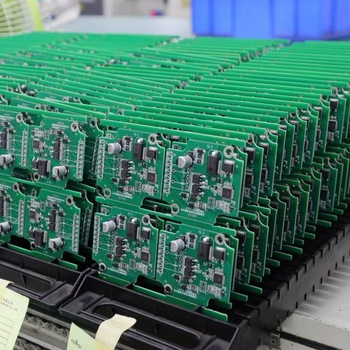
Quality assurance begins with incoming material inspection (IQC), verifying tape-and-reel peel strength and terminal co-planarity under digital microscopes. During SMT assembly, automated stencil printers deposit lead-free SAC305 paste using electro-polished laser stencils. Multi-axis pick-and-place equipment places each switch with optical centering. Following multi-zone reflow soldering, 100% of PCBA boards pass Automated Optical Inspection (AOI) to verify solder fillet joints, meniscus wetting, and zero terminal lift. Finally, custom functional test fixtures perform electrical resistance continuity and actuation confirmation prior to ESD-safe vacuum packaging.