Demystifying the Toroidal Iron Powder Core: The Workhorse of Power Magnetics
Power electronics and radio frequency engineers face an increasingly critical challenge: how to achieve extreme saturation current handling while minimizing parasitic electromagnetic interference (EMI) and preventing catastrophic core saturation under DC bias conditions.
A Toroidal Iron Powder Core represents an essential magnetic component engineered by compressing microscopically insulated, ultra-pure iron particles or alloy powders under pressures exceeding several tons per square centimeter. Unlike manganese-zinc (MnZn) or nickel-zinc (NiZn) ferrites that require a discrete, physically machined air gap to prevent magnetic saturation under heavy DC bias, iron powder cores inherently feature a distributed air gap. Each ferromagnetic particle is separated from its neighbors by a microscopic insulating binder matrix.
This microscopic architecture eliminates the severe fringing flux associated with discrete gapped ferrites. Discrete gaps cause concentrated flux leakage, creating localized eddy current heating in adjacent copper windings and radiating unwanted magnetic fields that degrade electromagnetic compatibility (EMC). Furthermore, iron powder toroidal geometry retains virtually all magnetic flux within the closed circular perimeter, yielding intrinsically superior self-shielding properties.
At Shenzhen Mivo Electronics Co., Ltd., we combine material science, precision pressing, and temperature-stabilized polymer encapsulation to deliver toroidal iron powder cores that excel in high-density DC output chokes, differential mode input filters, active power factor correction (PFC) inductors, and tuned high-frequency RF transmission circuits.
Future Sourcing Trends for Toroidal Iron Powder Cores
How the shift to wide-bandgap (WBG) semiconductors, automotive electrification, and micro-grid infrastructure is redefining procurement requirements.
GaN & SiC Frequency Migration
The rapid adoption of Gallium Nitride (GaN) and Silicon Carbide (SiC) MOSFETs has propelled switching frequencies from conventional 50 kHz–100 kHz thresholds up into the 300 kHz–1 MHz domain. Buyers are actively migrating from legacy -26 mixes toward ultra-low-loss Carbonyl iron, Sendust (Fe-Si-Al), and advanced hybrid amorphous powders to prevent excessive eddy current heat buildup.
Thermal Aging Resilience
Modern procurement contracts demand cores that resist irreversible binder deterioration under prolonged high operating temperatures (125°C to 150°C continuous). Shenzhen Mivo Electronics Co., Ltd. incorporates high-performance synthetic thermosetting compounds and inorganic hybrid passivation coatings to ensure zero thermal runaway risk over the 15-to-20-year lifespans required by EV and solar infrastructure.
Consolidated Modular Sourcing
Procurement teams are reducing supply chain friction by abandoning multi-tier vendors. Rather than buying bare cores from one vendor, magnet wire from a second, and assembly from a third, global OEMs partner with Shenzhen Mivo Electronics Co., Ltd. to secure precision-wound, tested toroidal inductors mounted directly onto turnkey PCBA boards in a single unified purchase order.
Green Metallurgy & Compliance
Global regulatory landscapes require full RoHS 3.0, REACH SVHC, and halogen-free compliance throughout the powder metallurgy lifecycle. Sourcing from audited, verified manufacturers ensures every core batch is documented with third-party chemical assays, preventing costly shipment customs rejections and environmental liability in the EU and North American markets.
Material Science In-Depth
Iron Powder vs. Ferrite, Sendust, and Kool Mµ
Understanding the architectural trade-offs between magnetic core materials to optimize your design's physical size, thermal overhead, and bill of materials (BOM).
Characteristic
Toroidal Iron Powder Core
Gapped Soft Ferrite (MnZn)
Sendust / Kool Mµ (FeSiAl)
High Flux (Ni-Fe)
Saturation Flux (Bs)
1.2 – 1.5 Tesla (Extremely High)
0.35 – 0.45 Tesla (Low)
1.05 Tesla (High)
1.5 Tesla (Extremely High)
Saturation Characteristic
Soft Saturation (Linear Roll-off)
Hard Saturation (Abrupt Drop)
Soft Saturation (Stable)
Soft Saturation (Very Stable)
Distributed Air Gap
Inherent in Powder Matrix
No (Requires mechanical gap)
Inherent in Powder Matrix
Inherent in Powder Matrix
Radiated EMI / Stray Flux
Extremely Low (Contained in ring)
High (Concentrated at gap)
Extremely Low
Extremely Low
High Frequency Core Loss
Moderate (Optimized <200 kHz)
Very Low
Low
Moderate to Low
Thermal Aging Sensitivity
Medium (Requires quality binder)
Zero (Ceramic material)
Zero
Zero
Cost Efficiency (BOM)
Most Cost-Effective
Medium
High
Very High
Integrated Production Ecosystem
Featured Magnetics, PCBA & Electronic Hardware
Explore representative components from our active production line. Custom dimensions, coatings, wire turns, and surface mounting options available from prototype quantities.
Magnetics
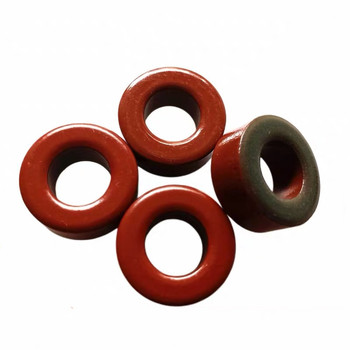
T94-2 RF Iron Powder Toroidal Core 24×14×8 mm
Carbonyl E formulation · 250 kHz–30 MHz · High Q resonance
Min. Order: 100 Pieces
PCBA Module
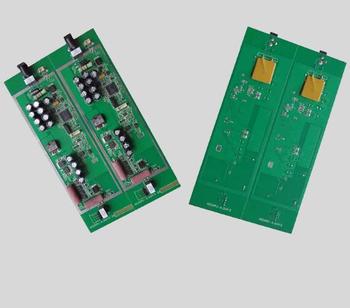
Turnkey Power Conversion PCBA with Integrated Chokes
Strategically situated in Shenzhen's electronics ecosystem, directly uniting precision magnetic material processing, turnkey PCB manufacturing, and comprehensive global export services.
Engineering Authority & Manufacturing Rigor
Shenzhen Mivo Electronics Co., Ltd. is an onsite-verified manufacturer based in Guangdong, China, dedicated to bridging the critical gap between advanced electronic component sourcing and complete turnkey PCB assembly. Our facility integrates precision powder magnetic core screening, automated coil winding, surface mount assembly (SMT), and rigid through-hole (THT) manufacturing into one seamless production chain.
With an experienced multidisciplinary engineering and production team of 51 to 100 professionals, we support global tier-1 automotive suppliers, industrial automation leaders, telecom infrastructure providers, and agile hardware startups. Whether you need an initial run of 5 custom wound toroidal core filter prototypes or full-scale monthly production batches exceeding 500,000 units, our agile manufacturing framework eliminates unnecessary distributor markups while ensuring uncompromising metallurgical precision.
Transparency is foundational to our business: our premises have passed comprehensive onsite audits by Alibaba.com, our commercial standing is verified by third-party certification authorities, and every material consignment is backed by detailed chemical certificates of analysis (COA) and electrical test logs.
Frequently Asked Questions: Toroidal Iron Powder Cores
Answers to the most critical technical and supply chain questions searched by hardware engineers and international procurement officers.
Why choose a Toroidal Iron Powder Core over a gapped ferrite core?
Toroidal iron powder cores possess a distributed air gap inherent to the microscopic insulated iron particles. Unlike discrete gapped ferrites that suffer from fringing flux losses, localized thermal hot spots, and harsh EMI radiation, iron powder toroids offer soft saturation characteristics, superior mechanical shock tolerance, substantially higher saturation flux density (up to 1.5T), and lower radiated EMI. When high peak currents surge through an iron powder choke, the inductance rolls off gently rather than crashing to zero, protecting sensitive switching semiconductors from catastrophic overcurrent failure.
How does Shenzhen Mivo Electronics prevent thermal aging in iron powder cores?
Thermal aging occurs in lower-tier cores when continuous exposure to temperatures above 75°C causes the organic polymer insulation between iron powder grains to break down over time. This binder deterioration triggers rising eddy current losses, causing the core to run progressively hotter until catastrophic thermal runaway occurs. Shenzhen Mivo Electronics Co., Ltd. solves this fundamentally by using proprietary thermoset inorganic-organic hybrid binders rated for Class F (155°C) and Class H (180°C) continuous service. Every batch undergoes accelerated high-temperature burn-in testing to guarantee permanent permeability and core loss stability across multi-decade product lifecycles.
What is the difference between Material -2, -26, and -52 iron powder cores?
The primary distinctions reside in initial permeability, particle sizing, core loss, and targeted frequency band:
Material -2 (Red/Clear): Initial permeability (μi) = 10. Engineered with pure Carbonyl E iron for high-Q radio frequency applications spanning 250 kHz to 30 MHz. It has the lowest core loss and highest thermal stability.
Material -26 (Yellow/White): Initial permeability (μi) = 75. The industry's standard cost-effective core for 50 Hz–100 kHz power applications, common-mode line filters, and DC output chokes.
Material -52 (Blue/Green): Initial permeability (μi) = 75. Developed specifically as an upgraded replacement for -26 in high-frequency SMPS (100 kHz–500 kHz). It provides the exact same inductance factor (AL) as -26 while cutting high-frequency core loss by 30% to 50%.
Can Shenzhen Mivo Electronics provide custom wire winding and turnkey PCBA integration?
Yes. Shenzhen Mivo Electronics Co., Ltd. operates both precision automatic toroidal winding machines and fully certified SMT/THT PCBA production lines in Shenzhen. We can deliver bare cores, machine-wound chokes (using enameled copper, triple-insulated wire, or high-frequency Litz wire), vacuum-impregnated assemblies, or fully soldered and tested power supply PCB modules. This one-stop manufacturing model streamlines procurement, reduces logistics overhead, and provides single-vendor accountability for overall system performance.
What minimum order quantity (MOQ) and production lead times apply for overseas orders?
For standard catalogue toroidal iron powder cores (such as T50, T68, T80, T94, T106, T130, T157), we maintain active inventory in Shenzhen, permitting immediate sample dispatch within 3 to 5 business days and production lead times of 2 to 3 weeks. Custom tooling for non-standard core geometries requires approximately 20 to 25 days. Prototype PCBA and custom wound inductors start from a flexible MOQ of just 5 to 100 pieces, enabling frictionless validation before committing to mass production.
How is dielectric breakdown protection ensured between core and magnet wire?
All toroidal iron powder cores produced by Shenzhen Mivo Electronics Co., Ltd. are coated with a continuous, high-adhesion electrostatic epoxy or parylene insulating layer. Our automated coating process guarantees smooth, radius-radiused edge coverage, preventing the core's metallic substrate from abrading enamel wire insulation during high-tension winding. Every core is subjected to high-potential (Hi-Pot) dielectric testing rated at 1000 VAC to 1500 VAC minimum for 60 seconds.
Accelerate Your Power Conversion & Magnetics Design
Contact our engineering support desk in Shenzhen for comprehensive core loss calculations, custom winding configurations, or volume pricing quotations. We respond within 24 business hours.