CE Certified EV Battery NTC Temperature Sensor Probe Factory & Exporter for Indianapolis
High-precision automotive negative temperature coefficient thermistors, custom multi-channel harness assemblies, and turnkey battery management system PCBA built for Indiana's electrified transit, heavy-haul, and energy storage OEM ecosystems.
Engineered Sensor & Thermal Hardware Portfolio
Precision Temperature Sensors, PCBA & Thermal Radiator Solutions
Manufactured to strict automotive thermal tolerances, certified with CE marking, and ready for rapid containerized export to central Indiana assembly plants.
Double-insulated resin epoxy potting for 800V packs
< 1.2s
Thermal Time Constant (τ)
Ultra-fast surface response on busbar interfaces
100%
CE & RoHS Compliance
Certified traceability with onsite-audited QC
Engineering White Paper & Regional Integration
Optimizing EV Battery Thermal Management Systems (BTMS) in the Midwest Corridor
Addressing the complex thermodynamic and electrical requirements of commercial vehicles, municipal e-fleets, and utility-scale energy storage in Indiana.
1. The Physics of Pack-Level Thermal Runaway & NTC Sensor Sizing
Lithium-ion cells—whether utilizing Nickel Manganese Cobalt (NMC) or Lithium Iron Phosphate (LFP) chemistries—operate within a narrow thermodynamic envelope. When battery temperatures drop below 15°C, internal impedance increases dramatically, inducing lithium plating during regenerative braking or high-C charging. Conversely, when cell junction temperatures exceed 55°C, Solid Electrolyte Interphase (SEI) decomposition begins, exposing the carbon anode to solvent electrolytes and creating exothermic self-heating that can escalate into thermal runaway. In commercial vehicle battery packs operating around Indianapolis, where ambient weather swings from sub-zero winter blasts (-20°C) to humid continental summer highs (+38°C), the demand placed on the Battery Management System (BMS) is exceptionally rigorous.
Negative Temperature Coefficient (NTC) thermistors serve as the nervous system of modern BTMS architectures. Unlike resistance temperature detectors (RTD) that provide linear yet subtle resistance variations, NTC ceramic elements exhibit an exponential decline in electrical resistance as temperature rises. The mathematical relationship is governed by the Steinhart-Hart equation and simplified via the Beta value formulation: R(T) = R0 * exp[B * (1/T - 1/T0)]. For automotive battery packs, an element rated at 10kΩ or 100kΩ at 25°C (with Beta constants such as B25/50 = 3435K, 3950K, or B25/85 = 4150K) provides steep sensitivity (ΔR/ΔT ≈ -4% to -4.5%/°C). This allows the 12-bit or 16-bit analog-to-digital converters (ADC) on BMS slave boards to resolve temperature shifts down to 0.05°C with rapid response times.
Key Engineering Finding: In modern 800V DC fast-charging architectures, localized hot spots on cell terminals and busbar connections develop within seconds during 350kW charging cycles. Utilizing ring-lug mounted NTC thermistor probes bolted directly to busbar junctions delivers a thermal time constant (τ) under 1.2 seconds, outperforming indirect potted sensors and providing instantaneous input to coolant diversion solenoids.
2. Dielectric Insulation & Creepage Challenges in High-Voltage Architectures
As commercial fleet builders throughout Indiana transition from legacy 400V packs to next-generation 800V silicon carbide (SiC) powertrains, sensor electrical isolation has emerged as a safety-critical design metric. Sensor probe wiring traverses tightly packed module housings where high voltage differential exists between the aluminum cooling plate, current collector tabs, and low-voltage wiring harnesses. A dielectric breakdown inside an NTC probe could introduce full traction voltage directly into the low-voltage BMS microcontroller bus, instantly destroying ECU circuitry and creating lethal arc-fault hazards.
To ensure uncompromised safety, Shenzhen Mivo Electronics implements a dual-barrier insulation architecture:
Outer Polyimide / Fluoropolymer Sleeving: Continuous high-temperature FEP/PTFE/Kapton sheathing rated for sustained operation from -50°C to +150°C, maintaining flexibility without micro-cracking across thousands of mechanical vibration cycles.
Hi-Pot Routine Testing: 100% factory verification where each production probe is subjected to 3,750V AC for 60 seconds with leakage current strictly bounded below 0.5mA.
3. CE Mark Compliance & Automotive Test Standards
Exporting electro-mechanical temperature components to demanding engineering teams in Indianapolis and the wider North American industrial corridor requires stringent quality control documentation. Our NTC temperature probe assemblies are fully certified under applicable European Directives (including Low Voltage Directive 2014/35/EU and Electromagnetic Compatibility 2014/30/EU), while meeting UL94-V0 flammability mandates and strict RoHS / REACH chemical limits. Furthermore, sensor prototypes are subjected to accelerated mechanical endurance testing:
Test Parameter
Standard Reference
Testing Conditions
Target Threshold & Result
Thermal Shock Cycling
IEC 60068-2-14
-40°C to +125°C, 30 min dwell, 1,000 cycles
ΔR25/R25 < 0.5%, Zero seal cracking
Random Vibration (Automotive)
ISO 16750-3 / USABC
10–2000Hz, 3 axes, 8 hrs/axis, 3.2g RMS
No open circuit; terminal retention > 50N
High Humidity Aging
IEC 60068-2-78
85°C / 85% RH steady-state, 1,000 hours
Insulation resistance > 500MΩ at 500V DC
Dielectric Withstand (Hi-Pot)
UL 1434 / CE LVD
3,750V AC applied terminal-to-sheath, 60s
Pass; leakage current < 0.5mA
Coolant Chemical Immersion
SAE J1455 Annex D
50/50 Water/Ethylene Glycol mix @ 95°C, 500h
No housing degradation; IP67 seal intact
Crossroads of America: Local Applications
Deploying NTC Temperature Sensors in Indianapolis’s Transportation Hub
Engineered to integrate seamlessly with the region's specialized commercial vehicle plants, electrified transit corridors, and grid-scale storage facilities.
Electric Heavy-Duty Trucks & Vocational Chassis
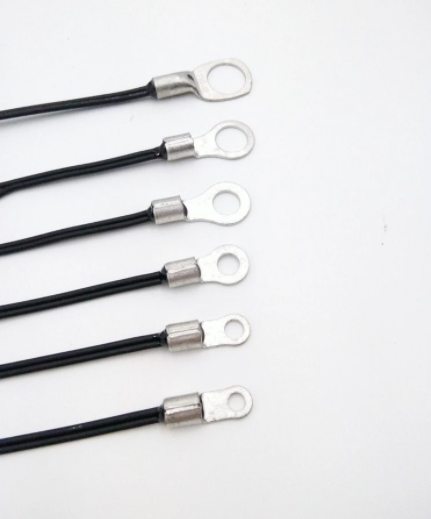
Indiana serves as a heartland for heavy truck manufacturing, bus builders, and specialized vocational bodies. Our M4/M5 ring-lug NTC thermistors bolt directly onto battery distribution units (BDU) and inter-module busbars, measuring high-current ohmic heating during regional line-haul operations along I-65 and I-70.
Utility Battery Energy Storage Systems (BESS)
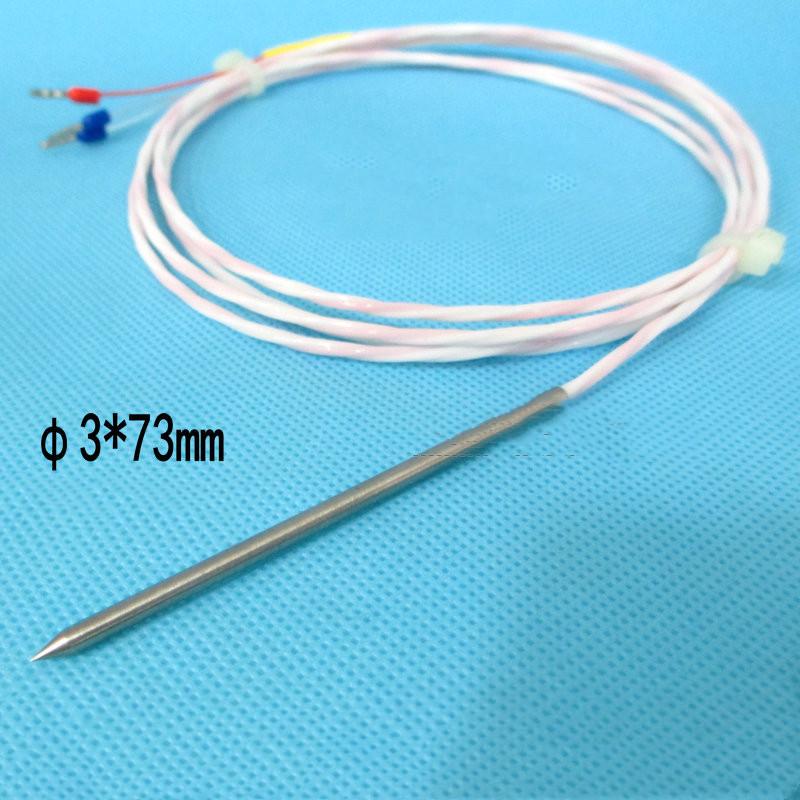
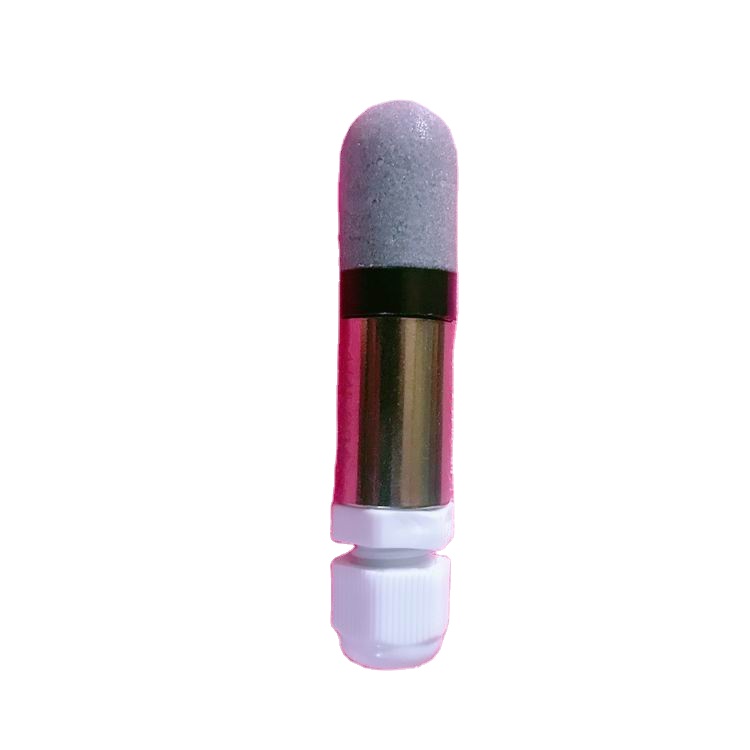
As utility providers across central Indiana deploy megawatt-scale lithium iron phosphate container systems to buffer grid volatility, our multi-channel temperature sensor harnesses and sintered waterproof PE protective probe shells provide continuous monitoring across thousands of clustered cells.
Motorsports R&D & Performance Electrification
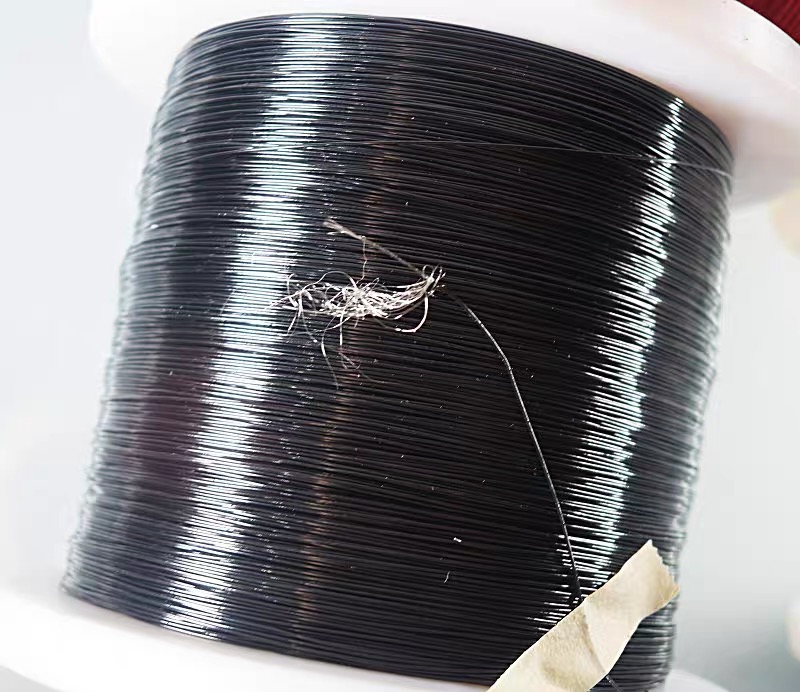
With Indianapolis celebrated globally as the epicenter of open-wheel racing, engineers developing high-output hybrid race drivetrains and electric prototypes demand hyper-responsive temperature monitoring. Our micro-bead 36AWG coaxial sensors measure instantaneous pack core thermals with sub-millisecond fidelity under high G-force loads.
Regional Market Intelligence
Macro Dynamics & Electrification Trends in Central Indiana
Understanding how the expansion of regional battery gigafactories and supply chain realignments impact tier procurement strategies.
The Midwest Gigafactory Corridor Expansion
Billions in capital investments across Indiana (such as multi-billion dollar EV battery joint ventures in Kokomo and New Carlisle) are catalyzing localized demand for sub-tier component suppliers. System integrators require reliable manufacturing partners able to deliver custom harness prototypes in days, backed by scale-up volume capability.
Midwestern winters subject electric school buses and delivery vans to extreme cold-soak cycles. Intelligent BTMS architectures require NTC sensors with tight tolerances down to -40°C to precisely trigger pack heating blankets and PTC heaters before initiating fast charging, preventing irreparable lithium dendrite formation.
Pack architectures are evolving rapidly from modular bolt-together bricks to direct Cell-to-Pack and Cell-to-Chassis assemblies. This shift drives demand for surface-mount NTC thermistors integrated directly onto Flexible Printed Circuits (FPC) and busbar contact systems, an area where our turnkey PCBA and FPC production capabilities excel.
Procurement & Technical Clarifications
Frequently Asked Questions: NTC Sensor Sourcing for Indianapolis Buyers
Direct technical and logistical answers regarding lead times, custom harness design, testing documentation, and US import compliance.
What are the standard resistance values and tolerances for your EV battery NTC probes?
Our most frequently specified automotive sensors are 10kΩ (with B25/85 of 3435K or 3950K) and 100kΩ (with B25/85 of 4150K). We supply precision calibration matching with interchangeability tolerances of ±0.5%, ±1%, and up to ±0.1°C across the operational temperature range of 0°C to 70°C. Custom R/T curve matching and proprietary mathematical coefficient tables can be programmed to match your existing BMS analog input lookup registers.
Can you manufacture custom sensor harnesses matching our proprietary automotive connectors?
Yes. As a direct manufacturer, we assemble complete multi-point harness looms equipped with automotive-grade interconnects such as Molex Micro-Lock Plus, TE Connectivity NanoMQS, JST PAP, or Amphenol high-voltage connectors. We customize wire gauges from 22AWG down to ultra-fine 36AWG micro-coax, apply abrasion-resistant braided sleeving, and integrate thermal relief boots according to your 2D/3D harness drawings.
How do you verify high-voltage electrical safety on sensors installed in 800V battery architectures?
Every high-voltage temperature probe assembly undergoes 100% automated electrical safety screening before packaging. This includes a Hi-Pot insulation withstand test (typically 3,000V to 3,750V AC for 60 seconds) between the sensor element leads and the external metallic lug or housing, and an insulation resistance check exceeding 500MΩ at 500V DC. Full batch test certificates (CoC) and Hipot logs accompany every export shipment.
What is the turnaround time and shipping procedure for deliveries to Indianapolis, Indiana?
Custom engineered prototype batches (from 10 to 50 pieces) are typically fabricated and tested within 7 to 10 working days. Production volume orders (1,000 to 50,000+ pieces) require 3 to 4 weeks depending on raw material allocations. For expedited delivery into Indianapolis, we partner with major express carriers (air freight transit: 4–6 business days to IND airport). For sea container freight, shipments transit through West Coast ports or East Coast gateways directly into Midwest intermodal container depots (typical transit: 22–28 days).
What files or specifications do your engineers need to prepare an engineering review and quotation?
To provide an actionable engineering review within 24 hours, please share: (1) Target resistance and Beta constant values (e.g., 10kΩ ±1% @ 25°C, B=3950K); (2) Desired mechanical housing (e.g., M4 ring lug, cylindrical stainless steel cartridge, or surface-mount SMD); (3) Cable length, jacket material (PTFE, XLPE, or Silicone), and termination connector part number; (4) Operating temperature limits and dielectric withstand voltage requirements.
How is Shenzhen Mivo Electronics verified as an authoritative manufacturing partner?
Shenzhen Mivo Electronics Co., Ltd. has traded continuously for over 8 years with an average customer rating of 4.7 out of 5 stars. Our factory premises have successfully passed physical onsite audits by international verification authorities. We maintain full traceability from incoming raw NTC thermistor chips to automated potting, SMT assembly lines, and calibrated thermal bath testing.
Direct Shenzhen Electronics Factory Advantage
Combining agile electronics engineering, verified manufacturing lines, and deep component supply chain access to deliver end-to-end turnkey quality for Indianapolis OEMs.
Onsite-Verified Factory: Fully audited physical manufacturing facility in Shenzhen, Guangdong.
Turnkey PCBA & Sensor Assembly: One team manages PCB fabrication, component sourcing, harness potting, and testing.
Low MOQ for Prototypes: Custom probe prototypes from 10 pcs; turnkey PCBA prototypes starting from just 5 pcs.
Transparent Quality: 100% electrical and thermal testing with comprehensive DFM review prior to tooling release.
Verified Enterprise Profile
Business Entity
Shenzhen Mivo Electronics Co., Ltd.
Audited Facility
Yuanshan Street, Shenzhen, China
Workforce Scale
51 – 100 Skilled Personnel
Export Track Record
8+ Years Global Direct Supply
Buyer Satisfaction
4.7 / 5.0 Star Verified Rating
Core Expertise
NTC Sensors, PT100, PCBA, Aluminum PCB, FPC
Quality Assurance
CE, RoHS, Hipot 3.75kV Tested, ISO Process
Accelerate Your EV Thermal Management Project Today
Consult directly with our sensor engineering and PCBA hardware specialists. Share your harness drawings, Gerber files, or required R/T resistance curves for an actionable evaluation within 24 hours.