Precision Modules, Flexible Assemblies & Sensing Solutions
Direct integration components manufactured under IPC-A-600/610 Class 2 & 3 standards. Ready for turnkey SMT placement, cable wire integration, and deployment into Nashville hardware assemblies.
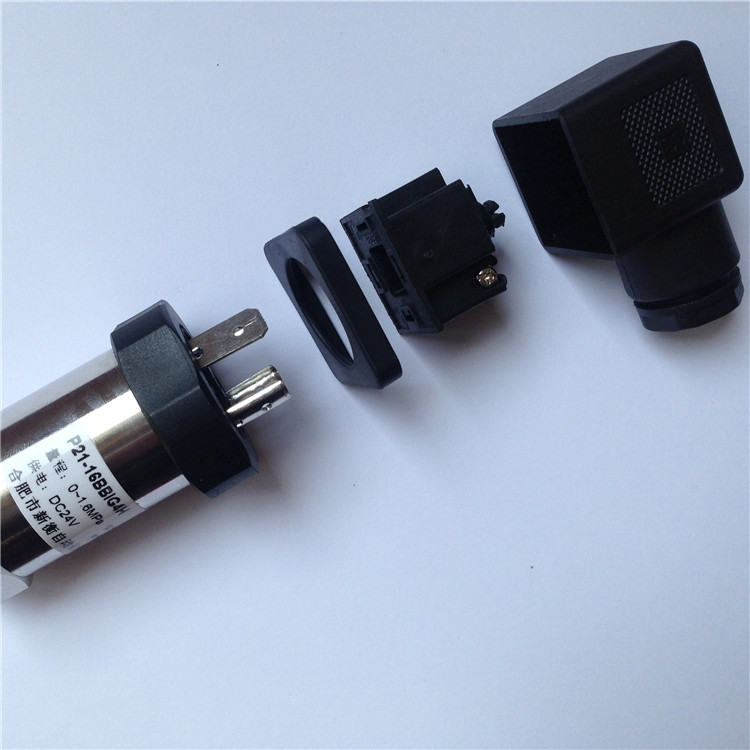
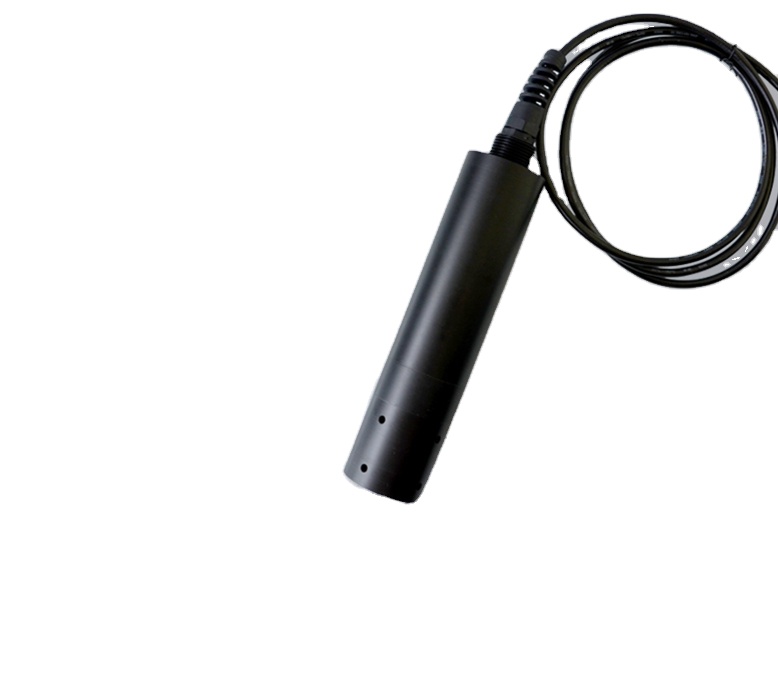
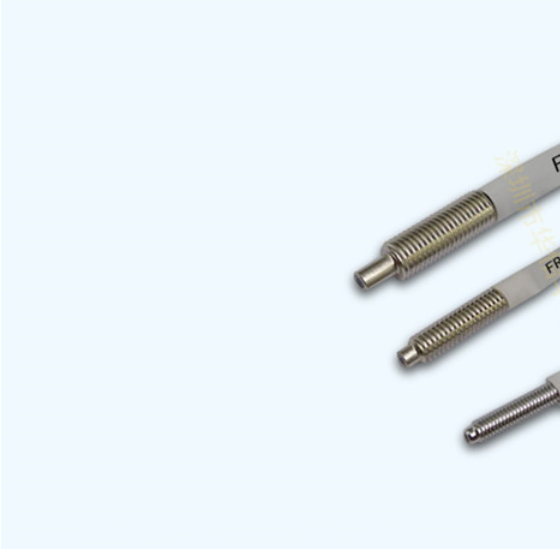
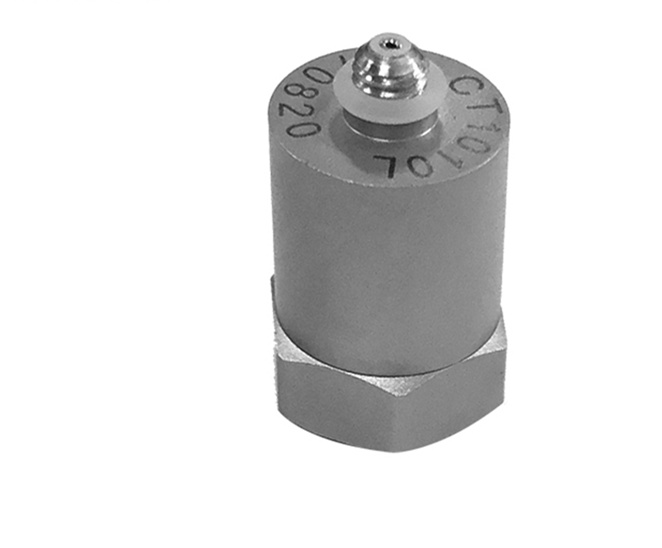
Output M5 CT1010L ICP/IEPE 0.5-5000Hz Accelerometer Impact Sensor
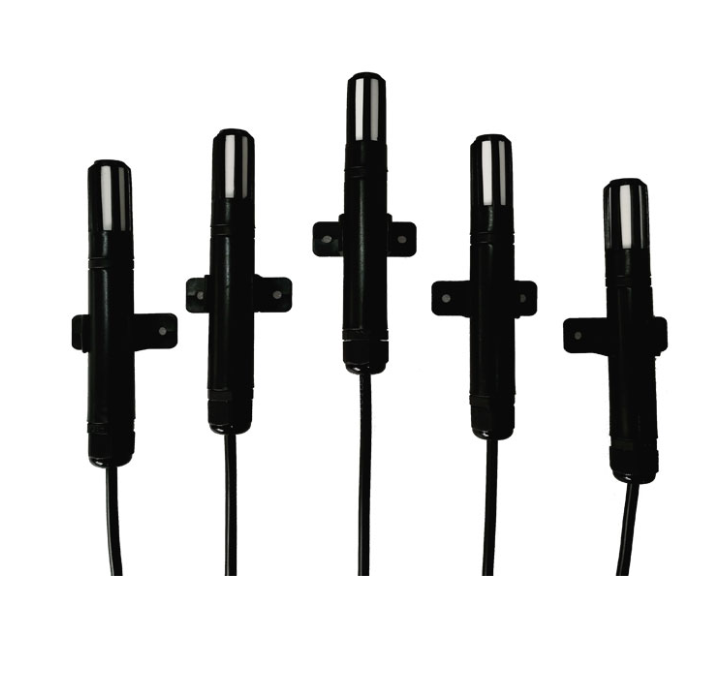

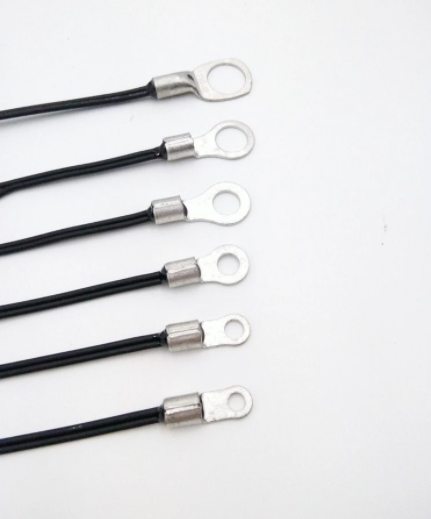
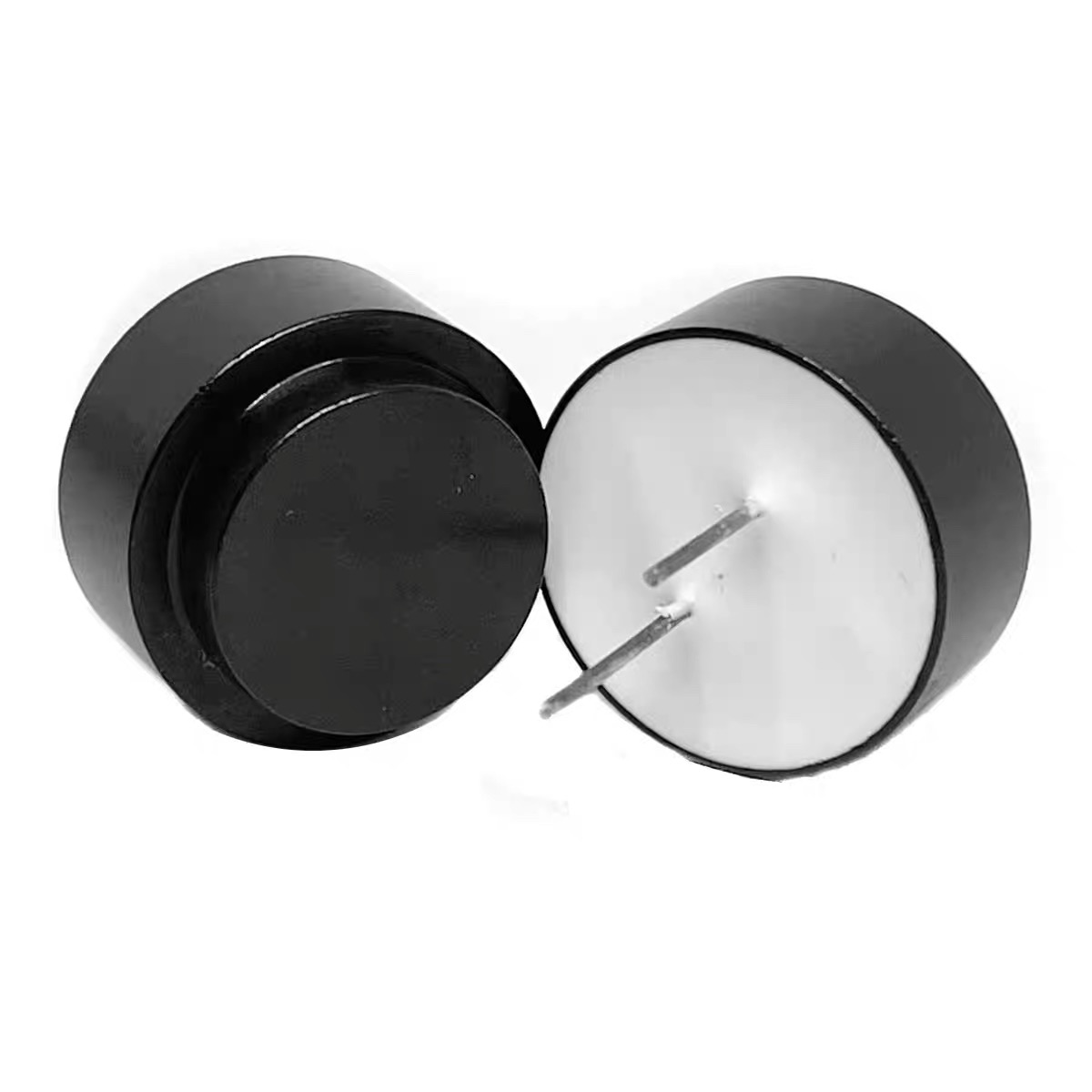
16mm Waterproof Ultrasonic Sensor Probe for Car Distance Proximity Module
Advancing Mechanical Density: The Flexible Circuit Advantage in Middle Tennessee
The Greater Nashville metropolitan area—spanning Davidson, Williamson, Rutherford, and Wilson counties—has rapidly evolved into an advanced manufacturing nucleus. Driven by the expansion of electric vehicle (EV) battery manufacturing corridors, medical instrumentation research centers, and cutting-edge professional audio hardware manufacturers, modern electronics packaging requires extreme space utilization and mechanical compliance.
Traditional rigid FR-4 circuit boards paired with bulky wire harnesses present failure modes in high-vibration automotive environments, consume critical packaging envelope space, and introduce human assembly error. Flexible Printed Circuits (FPC) and Rigid-Flex multi-layer boards eliminate up to 70% of inter-board wiring weight, reduce volume requirements, and provide predictable, impedance-controlled trace routing.
Shenzhen Mivo Electronics Co., Ltd. provides direct engineering and factory fabrication services to OEMs, system integrators, and design firms throughout Nashville. From rapid turnaround polyimide prototypes in 5 pieces to full turnkey SMT assembly with flying-probe verification, we bridge the gap between initial DFM optimization and production volume scaling.
Substrate Architecture: Polyimide (PI) vs. Polyester (PET)
For mission-critical engineering, choosing the appropriate dielectric substrate determines bend endurance, operating temperature boundaries, and solderability:
- Polyimide (Kapton® Equivalent): Glass transition temperature ($T_g$) > 300°C. Standard for lead-free SAC305 SMT reflow ($260^\circ\text{C}$ peak). Exceptional dynamic flex life exceeding 100,000 to 1,000,000 cycles when rolled annealed (RA) copper foil is specified.
- Polyester (PET): Economical choice for low-cost, static-bend consumer membrane keypads and simple interconnect ribbons. Max operating threshold of 85°C to 105°C; incompatible with automated high-temperature reflow soldering.
- Adhesiveless Polyimide Base: Offers superior thermal dissipation, thinner profile (down to 12.5 μm base PI), and tighter controlled impedance tolerances ($\pm 7\%$) for high-speed differential pairs compared to adhesive-bonded laminates.
High-Yield Engineering Applications Across Middle Tennessee
Our flex PCB and rigid-flex manufacturing solutions solve acute electro-mechanical packaging challenges specific to Nashville's dominant industrial ecosystems.
Automotive & Battery Systems
Surrounding the I-65 and I-24 automotive supply chains (including Spring Hill, Smyrna, and regional EV assembly plants), we manufacture continuous-length flex circuits for Battery Management Systems (BMS).
- Integrated NTC thermistor sensor lines for high-voltage battery cell temperature monitoring.
- Adhesive-backed multi-conductor FPC eliminating bulky wire looms inside tight battery module casings.
- High-reliability copper trace current routing resistant to engine bay vibration and thermal shock (-40°C to +125°C).
Nashville HealthTech & Medical Devices
Collaborating with biomedical innovators and research spin-offs connected to Vanderbilt University Medical Center and Nashville's healthcare sector, where ultra-compact bio-compatibility is mandatory.
- Sub-miniature multi-layer flex circuits for disposable endoscopes, ultrasonic transducers, and catheter probes.
- Electroless Nickel Electroless Palladium Immersion Gold (ENEPIG) surface finishes for gold-wire bonding.
- Implantable and wearable patient monitoring hardware demanding adhesiveless polyimide substrates.
Pro Audio & Music Production Gear
Serving the Music City sound engineering corridor along Music Row and Nashville studios developing custom microphones, studio consoles, tube gear, and high-fidelity signal processors.
- Low-noise, shielded flexible interposers connecting condenser capsule diaphragms to internal pre-amp stages.
- Cross-talk isolated multi-layer flexible ribbons replacing point-to-point analog wiring in audio mixing desks.
- Rigid-flex boards supporting front-panel potentiometers, tactile switches, and high-density audio converters.
Engineering Specifications & Flex Bend Physics
A rigorous understanding of copper grain direction, coverlay opening tolerances, and mechanical neutral axis alignment prevents conductor micro-fracturing in dynamic cycling.
| Design Parameter | Standard Capability | Advanced / High-Density Interconnect (HDI) | Engineering Notes |
|---|---|---|---|
| Layer Count | 1 - 4 Layers (Pure Flex) | 5 - 8 Layers Flex / Up to 16L Rigid-Flex | Bookbinder stack-up recommended for >2 flex layers |
| Base Dielectric Thickness | 25 μm (1.0 mil) Polyimide | 12.5 μm (0.5 mil) Polyimide | Thinner base drastically increases dynamic bend life |
| Copper Foil Metallurgy | Rolled Annealed (RA) Copper | Ultra-thin RA Copper (1/3 oz / 12 μm) | RA copper grain runs parallel to bend axis for flexibility |
| Min. Line Width / Space | 0.075 mm / 0.075 mm (3/3 mil) | 0.060 mm / 0.060 mm (2.4/2.4 mil) | Etch compensation factor applied during CAM review |
| Surface Finishes | ENIG (≥1μ" Au, 120μ" Ni) / OSP | ENEPIG / Immersion Silver / Soft Gold | ENEPIG eliminates black pad risks in dynamic conditions |
| Stiffener Integration | FR-4 (0.2 - 2.0 mm), Polyimide | Stainless Steel / Aluminum Heat-Spreaders | Thermal bonding film ensures zero delamination under peel test |
| Min. Dynamic Bend Radius | $R \ge 10 \times \text{Thickness}$ (1-2 Layers) | $R \ge 20 \times \text{Thickness}$ (Multilayer) | Conductors placed along neutral mechanical axis |
DFM Rule 1: Staggered Conductor Routing
In double-sided and multilayer flexible circuits, never place conductors directly over one another on opposing layers through a bend zone. Overlapping traces create an artificial I-beam effect, multiplying internal tension and shear stress. Always stagger traces to distribute tensile and compressive forces evenly across the polyimide core.
Additionally, eliminate 90-degree corner traces. Use gentle arc transitions or 45-degree chamfers with curved fillets to mitigate localized stress concentration during installation.
DFM Rule 2: Stiffener-to-Coverlay Overlap
Where flexible circuits transition into rigid connector termination zones, stiffeners (FR-4 or Stainless Steel) are laminated on the rear side. A severe design failure occurs when the edge of the coverlay and the edge of the stiffener terminate at the exact same coordinate.
Engineers must ensure a minimum 0.50 mm (20 mil) stagger between the coverlay termination and stiffener boundary. Applying a flexible acrylic or polyurethane bead along the junction further prevents sharp trace buckling.
Nashville Hardware Growth: Supply Chain Demands & Evolution
Why procurement teams and hardware engineering groups across Tennessee are upgrading their flex circuit supply lines.
Over the past decade, Nashville has outpaced national averages in technology job expansion. The regional emergence of smart logistics along the Cumberland River freight corridors, robotic automation in warehouse hubs, and precision electronics integration has changed hardware prototyping realities.
Engineers in Nashville cannot afford standard 8-to-10 week lead times from traditional domestic brokers, nor can they risk unverified overseas trading companies. Modern product iteration requires:
- Rapid DFM Feasibility in 24 Hours: Identifying footprint geometry errors, unsupported copper tabs, and via-in-pad defects before tooling fabrication begins.
- Seamless Transition from Prototype to Volume: Low minimum order quantities starting from 5 pieces for initial lab prototypes, expanding smoothly into 100,000+ unit production lots.
- Comprehensive Turnkey PCBA: Complete SMT placement directly on polyimide using specialized vacuum fixtures, solder paste stencils, and automated component sourcing from Tier-1 distributors.
Shenzhen Mivo Electronics bridges this requirement by offering direct factory engineering communication, strict IPC Class 2/3 quality verification, and direct DHL/FedEx priority logistics into Nashville International Airport (BNA) within 3 to 5 business days.
Turnkey SMT Assembly on Flexible Substrates
Mounting discrete SMT devices (down to 0201 packages) and fine-pitch BGA/QFN ICs on flex circuits demands specialized manufacturing controls not present in standard rigid board assembly lines:
- Precision High-Temperature Tooling Pallets: CNC-machined synthetic stone or magnetic carriers ensure flex circuits remain planarly flat during solder paste printing and pick-and-place indexing.
- Pre-Bake Dehydration Cycles: Polyimide absorbs ambient atmospheric moisture up to 3%. FPC panels undergo an automated 2-to-4 hour vacuum bake at 110°C–120°C prior to reflow to prevent delamination or micro-blistering.
- Fine-Tuned Thermal Reflow Profiling: Strict ramp-rate control with nitrogen inerting prevents thermal warping of thin dielectric substrates.
Verified Manufacturing Capabilities & Quality Systems
Shenzhen Mivo Electronics Co., Ltd. combines an established onsite-verified factory footprint with the agility required by North American engineering teams.
Why Nashville Buyers Partner Directly with Mivo
Unlike regional brokers who mark up costs and conceal the underlying factory floor, Mivo Electronics operates with total transparency. Our facility has passed comprehensive onsite verification by Alibaba.com and third-party inspection firms.
We manage every facet of production under one roof: multi-layer flex circuit fabrication, precision laser cutting of coverlays, FR-4/polyimide/metal stiffener lamination, SMT solder paste stencils, and full turnkey electronic component procurement.
When obsolescence or supply chain bottlenecks threaten your production schedule, our procurement engineers identify vetted drop-in cross-references for passives, microcontrollers, and sensor ICs—implementing substitutions only after your written engineering sign-off.
End-to-End Quality Verification Protocol
- Automated Optical Inspection (AOI): 100% scan of inner and outer flex conductor layers to catch etching defects, bridging, and neck-downs down to 0.05 mm.
- Flying Probe & Dedicated Fixture E-Test: Continuity and isolation testing verifies netlist integrity against original Gerber files.
- Micro-Sectioning & Thermal Stress: Cross-sectional copper plating thickness measurements across plated through-holes (PTH) ensuring ≥20 μm barrel wall copper.
- Peel Strength & Flex Endurance Testing: Dynamic mechanical cycling testing confirms coverlay adhesion and foil flexibility standards under IPC-TM-650.
Frequently Asked Questions: Ordering Flex PCBs for Nashville Projects
Direct technical answers to common questions asked by Tennessee hardware engineers, procurement specialists, and operations managers.
What files and documentation are required to quote a flex PCB or turnkey assembly?
- Gerber RS-274X or ODB++ files: Including copper layers, solder mask/coverlay openings, drill files, and mechanical outline.
- Layer Stack-up & Fabrication Drawing: Specifying base polyimide thickness, copper weight (0.5 oz, 1 oz, RA copper), coverlay color, stiffener materials (FR-4, PI, stainless steel), and selective plating requirements.
- Bill of Materials (BOM) for PCBA: Complete with manufacturer part numbers, reference designators, package footprints, and authorized alternate parts.
- Centroid / Pick-and-Place File: For SMT automated component placement.
How do you manage shipping, customs clearance, and transit times to Nashville, TN?
What is the difference between static flex and dynamic flex design?
Dynamic Flex: The circuit continuously bends during normal product operation (e.g., robotic arms, rotating sensor heads, printer heads). This requires Rolled Annealed (RA) copper, single or staggered double-layer configurations, thinner polyimide dielectric (12.5 μm), and a conservative bend radius of at least 20× to 40× the total stack-up thickness to prevent conductor fatigue failure.
Can you manufacture Rigid-Flex boards with FR-4 and Polyimide integration?
What are your Minimum Order Quantities (MOQ) for prototypes versus production?
How does Mivo handle component shortages, obsolete parts, and counterfeit risks?
Initiate Your Flex Circuit Project with Mivo Electronics
Whether you require a fast DFM review on a new medical wearable, BMS battery interconnect harnesses for automotive trials, or a reliable production partner for custom acoustic sensor assemblies, our engineering staff is ready to assist.