Featured Current Measurement & Instrumentation Modules
Engineered for extreme operating temperatures, accurate phase detection, and seamless integration into industrial automation networks, DC microgrids, and electric vehicle drives.
Open Loop Hall Effect Architecture: Principles & Magnetic Design
A deep look into non-intrusive current acquisition, primary core saturation, and drift mitigation across demanding power transmission platforms.
Galvanic Isolation & Magnetic Flux Concentration
The fundamental architecture of an Open Loop Hall Current Transducer relies on a high-permeability soft-ferrite or silicon-steel toroidal magnetic core slotted with a precise air gap. As current flows through the primary conductor ($I_p$), it induces a proportional magnetic flux density ($B$) across the magnetic circuit according to Ampere's Circuital Law: B = μ0μr(N×I_p / l).
Within the air gap sits an ultra-thin semiconductor Hall element or advanced integrated BiCMOS Hall-effect ASIC. The transverse magnetic field exerts a Lorentz force on charge carriers passing through the Hall plate, generating a perpendicular potential differential—the Hall voltage ($V_H$). Because the primary circuit is physically detached from the secondary measurement circuit, our transducers guarantee dielectric isolation voltages exceeding 3 kV to 5 kV RMS (50 Hz, 1 min), satisfying international standards like IEC 61800-5-1 and UL 94-V0 flammability criteria.
Unlike closed-loop (magnetic compensation) topologies that consume significant secondary current to null the internal flux, open-loop current transducers consume nominal quiescent power (<15 mA). This feature makes them ideal for decentralized battery energy storage systems (BESS), solar string combiner boxes, and auxiliary power supplies across Moldovan industrial zones.
| Design Metric | Open Loop Specification |
|---|---|
| Current Range | 10A up to 2500A (AC, DC, Pulsed) |
| Linearity Error | < ±1.0% of Nominal ($I_{pn}$) |
| Bandwidth (-3dB) | DC to 25 kHz / 50 kHz |
| Dielectric Strength | 3.5 kV RMS / 50 Hz / 1 min |
| Response Time | < 3.0 μs (at 90% $dI/dt$) |
| Thermal Drift | < ±0.05% of Reading / °C |
Localized Applications Across the Republic of Moldova
How our transducers and integrated PCBA solutions directly support Moldova’s evolving industrial corridor, renewable energy initiatives, and cross-border transport infrastructure.
Renewable Energy & Solar Inverters
With the Moldovan Energy Efficiency Agency (AEE) accelerating photovoltaic generation in southern regions like Găgăuzia and Cahul, open-loop current transducers serve as primary current feedback units in central and string solar inverters, preventing DC injection into the utility grid.
FEZ Bălți Automotive & Cable Plants
The Free Economic Zone (ZEL) Bălți and subzones in Strășeni represent high-density European automotive assembly clusters. Open-loop sensors measure continuous current in robotic wire-crimping machinery, high-voltage battery test beds, and injection molding workcells.
Substation & Grid Modernization
As Moldelectrica synchronizes regional power grids with ENTSO-E (Continental Europe), high-reliability open-loop Hall transducers are retrofitted into medium-voltage distribution panels for feeder monitoring, ground-fault detection, and remote telemetry logging.
Chișinău Municipal EV Charging
The municipality of Chișinău is expanding Level-3 DC Fast Charging (DCFC) hubs. Our compact open-loop transducers, capable of handling 150A to 600A continuous DC, provide isolated current metering for billing modules and rapid fault shutoff circuitry.
Agro-Industrial Pumps & VFDs
Moldova's large-scale agro-processing and cold-storage operations in Orhei and Ungheni utilize variable frequency drives (VFDs). Our Hall current transducers detect phase unbalance, overcurrent surges, and motor stall conditions in industrial refrigeration compressors.
Industrial Water Treatment
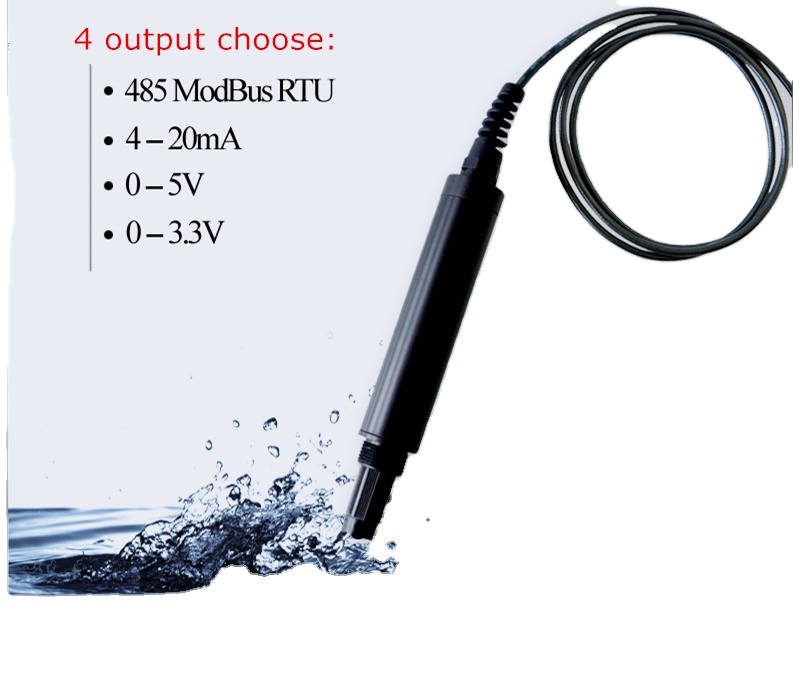
Integrating seamlessly with our DOS-600 Dissolved Oxygen and DTS-600 Turbidity sensors, current transducers monitor pump loads in wastewater treatment facilities across Bălți, ensuring uninterrupted mechanical aeration and sludge processing.
Future Trends: Nearshoring, Renewable Growth & Smart Grid Resiliency
Key macro factors reshaping electronic sensor procurement and current transducer adoption across the Moldovan industrial territory through 2030.
EU Harmonization (CE & RoHS)
As Moldova progresses with EU integration, national industrial plants must conform strictly to EN 61326-1 (EMC) and Low Voltage Directive (LVD). Our production facilities supply fully certified sensors backed by full compliance testing documentation.
Nearshoring to Free Zones
European OEMs are relocating subsystem assembly to Moldova to leverage geographic proximity and trade pacts. The demand for flexible component supply partners providing turnkey PCBA and custom sensor probes has expanded by over 28% year-on-year.
DC Microgrids & Storage
Grid independence strategies have catalyzed commercial adoption of battery backup arrays. Hall current transducers with bipolar voltage outputs (±4V or ±5V) are becoming standard for bidirectional battery current state-of-charge (SoC) estimation.
Predictive Maintenance
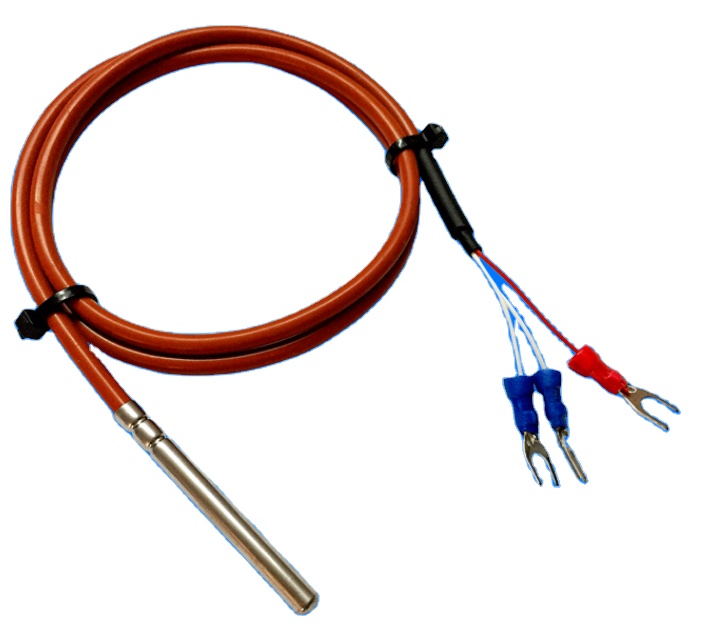
Industrial machinery operators are pairing current sensors with vibration and thermal probes (like our PT100 RTD series) to feed Edge-AI telemetry modules for early bearing failure detection and anomalous power consumption diagnosis.
Why Moldovan Engineers & Purchasing Officers Partner With Us
Combining Shenzhen’s agile electronics manufacturing ecosystem with rigorous quality control, verified audit trails, and end-to-end turnkey assembly services.
Established Year
Exporting Experience
Verified Buyer Rating
Min. PCBA Prototype
Onsite-Verified Factory
Onsite-Verified Precision SMT & Assembly
Our manufacturing premises have passed comprehensive onsite checks by third-party inspection firms. We operate automated pick-and-place lines, nitrogen-assisted reflow ovens, and 3D automated optical inspection (AOI) to eliminate soldering defects on high-density transducer boards.
Low-MOQ Prototype to Volume Production
We eliminate high barrier-to-entry friction: prototype PCBA and sensor module modifications start from just 5 to 10 pieces. Whether your engineering team in Chișinău is validating an R&D pilot or commissioning thousands of units, our scale flexes to match your build phase.
Turnkey BOM Sourcing & Engineering DFM
Gain full visibility into your supply chain. Our procurement team works directly with certified component distributors in Shenzhen to source genuine Hall ASICs, toroidal cores, and terminal blocks. We provide thorough Design for Manufacturability (DFM) reviews before production commences.
Frequently Asked Questions by Moldovan Buyers
Everything electrical engineers, plant technicians, and commercial procurement managers need to know about specifications, certifications, and delivery timelines.
What is the typical shipping lead time to Moldova?
For prototype PCBA or sample current transducers (5–10 pieces), production requires 5–7 working days, followed by 4–6 days via express air freight (DHL, FedEx, or UPS) directly to Chișinău International Airport (KIV) or customs terminals in Bălți. Standard sea-rail multimodal freight routes to Giurgiulești Port or via Constanța (Romania) are available for high-volume commercial container loads.
How do open loop transducers perform in continental winter extremes?
Moldovan winters can subject unconditioned outdoor enclosures (such as solar distribution kiosks) to temperatures as low as -25°C. Our industrial-grade open-loop transducers utilize temperature-compensated integrated Hall elements and flame-retardant silicone potting compound (UL 94-V0), maintaining strict linearity across an operating temperature range of -40°C to +85°C.
Can you provide custom apertures, busbars, and output signals?
Yes. We accommodate non-standard installation spaces with custom core apertures (split-core round, rectangular window for busbars, or PCB pin-through models). Secondary output options include instantaneous ±4V / ±5V, unipolar 0–5V DC, true RMS 4–20mA current loop, or direct digital RS485 Modbus RTU connectivity.
How do our engineers obtain technical test data and 3D CAD files?
Before placement of tooling or PCB fabrication orders, our engineering office provides 3D STEP/IGES mechanical drawings, detailed pinout schematics, and simulation reports for thermal drift. Every production batch is supplied with an individual factory calibration report documenting zero offset, sensitivity, and dielectric hi-pot test metrics.
Request Custom Quotation or Engineering Consultation
Provide your nominal current, primary aperture dimensions, and supply voltage requirements. Our technical sales engineers respond within 24 hours.